Ministerial foreword
For three decades, the National Lottery has been a staple of British life. It is a genuine national institution, belonging to all of us – like the NHS or the BBC – woven into the fabric of our nation. From the elite athletes who inspire us on the global stage to the local projects that are the heartbeat of our towns, this funding is a crucial tool to ensure our sport, culture, and heritage do not just survive, but thrive.
With over £53 billion generated for more than 680,000 projects, its impact across the whole of the UK is undeniable. We see it in the restoration and upkeep of our industrial history, the cinematic triumphs that tell our national story, the community hubs that bring us together and the grassroots sports clubs in every corner of the UK. These are not just buildings and organisations; they are the anchors of our communities and the foundations of our society. They are the places where confidence is built and where the next generation discovers their talent belongs on every stage and on every pitch they choose to play on.
But we have to be honest; while the impact of this funding has been life-changing, the way it is distributed is showing its age. The current funding model was built for a world that has long since passed us by. It is a model rooted in a different era, too often reliant on centralisation, with decisions about where this money goes being made in distant rooms, far from the communities who know their needs best. We need to flip that model, and as we look towards the next thirty years, we want to ensure the National Lottery is not just something that happens to people, but something that is driven by them.
That is why the government is launching this call for evidence on National Lottery Good Causes: Fund what matters to you. This isn’t just a review; it’s about fundamentally re-evaluating how good cause funding is distributed and ensuring that the voice of the whole country is heard. Our mission is guided by three simple beliefs:
- This funding belongs to you. The billions of pounds raised should reflect the priorities of the British public. We want this investment to reach deep into communities and fund your priorities.
- Decisions should be made by you. We want to give local people a genuine voice in how funding is spent in their own communities. It’s time to move beyond top-down mandates and trust the people who know their streets, their clubs, and their heritage best.
- Your ambition shouldn’t be met with red tape. We are committed to stripping away the bureaucracy that acts as a barrier to community spirit. We want to make it easier for small, grassroots organisations to access the support they deserve without being drowned in paperwork.
The National Lottery reminds us of the power we hold when we stand together. It is an asset we all have a stake in. This call for evidence is the first step in protecting and strengthening this institution for future generations, ensuring it is driven by the very communities it is meant to serve.
Baroness Twycross (Minister for Museums, Gambling and Heritage)
The power of the lottery
Since the very first draw on 19 November 1994, the National Lottery has generated over £53 billion for good causes, supporting communities and transforming lives across every postcode in the UK.
On the national and international stage, it has helped us showcase the UK, inspired us, and reminded us all what we can achieve together. There is no better example of this than the London 2012 Olympic and Paralympic Games, and the continued success of our Olympians and Paralympians. Equally inspiring are the national landmarks it has helped create, from Shakespeare’s Globe in London to the Millennium Stadium (now the Principality Stadium) in Cardiff, the Mary Rose Museum in Portsmouth to the Titanic Quarter in Belfast and the V&A Museum in Dundee. It has also funded some of the UK’s most beloved and iconic cinematic successes, including national treasures like Billy Elliot, noughties favourite Bend it Like Beckham and the award-winning Aftersun.
This is only a small part of the story. The National Lottery and the 12 organisations who distribute good cause funding have played an essential role supporting local people across the country to improve their communities and the lives of their neighbours. This includes the local clubs and organisations in every city, town and village giving people access to sport and art and preserving local heritage and history, as well as the charities, voluntary organisations, and community groups providing vital local support. Crucially, while taxpayer-funded government spending secures our essential public services, Lottery funding provides that vital extra boost. It directly supports the causes and projects that bring us together and add so much joy to our lives – reaching areas that statutory funding typically is unable to.
Like the BBC and the NHS, the National Lottery is a national institution which touches all of our lives and which we all have a stake in. It is essential that we protect it for future generations, and this call for evidence is the first step in that process – building on the National Lottery’s successes while ensuring good cause funding continues to deliver on the people’s priorities for many years to come.
Good cause funding in action
The National Lottery has the power to impact everyone, from providing multi-million-pound support to our athletes to the vital small grants that sustain the heartbeat of our local communities.
Across the last 30 years, this funding has acted as the foundation for the UK’s cultural and social evolution. Its impact can be found in the reclaimed community centres where neighbours can connect, the local sports pitches where young people can build their confidence, and the grassroots arts projects that give a voice to the unheard. This investment supports essential activities and causes that sit outside the remit of statutory government spending, making it a unique pillar of British life.
In order to truly appreciate the power of the National Lottery, we must look into the heart of our communities. Read the case studies below for an illustrative range of the breadth of positive impacts good cause funding has delivered across every sector and in every corner of the UK.

Image credit: Above Below Beyond Youth Panel and Banner- East Durham Creates,
Photographer Alex Zawadzki
Location: County Durham, North East England
Distributor: Arts Council England, Creative People and Places programme
Project: No More Nowt (formerly East Durham Creates) is a community-led arts programme that empowers residents across County Durham to engage in creative activities and grow arts provision in sustainable ways. By partnering with local community hubs, the project ensures that those who may feel the furthest away from ‘traditional’ arts venues (for example, theatres, galleries, museums) have the opportunity to get involved and tell their own stories. This has been achieved through programmes such as Nana’s House, which saw an empty shopping centre unit transformed into a public living room and a vibrant social hub, and A Seat at the Table, a theatre project co-created with residents to celebrate and strengthen the local community hubs that provide a vital lifeline.
Impact: The project has fundamentally strengthened the social and cultural infrastructure of the region, improved social cohesion and empowered communities that previously felt excluded from the arts, with 97% of its participants coming from areas of low cultural engagement. It has also provided a vital platform for personal transformation and local pride, with one community creative noting:
It gives us the chance to be proud of our home and the people in it … showcasing who we are today. Our stories, our lives, showing that they matter; that we are allowed to be creative.
Rathfern Community Regeneration Group
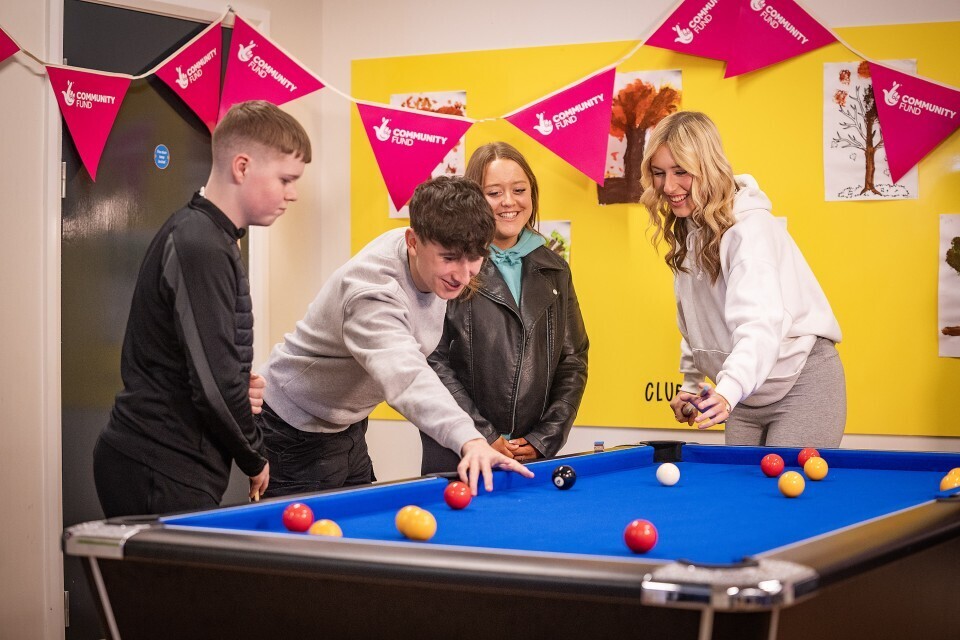
Image credit: TNLCF
Location: Scotland
Distributor: The National Lottery Community Fund
Project: Rathfern Community Regeneration Group runs a community hub and delivers activities for young people in the Newtownabbey area. They have received funding from The National Lottery Community Fund over the past ten years to make energy efficiency improvements and run youth clubs, a men’s shed, mental health support, employability skills training and environmental programmes.
Their centre in Newtownabbey is a welcoming hub delivering activities and support for everyone in the community. The group’s most recent grant is being used to support young people in the area to develop employability skills, build their confidence and improve their mental health. Young people come to the hub every week to connect with their friends in a safe space and take an active role in their community.
Impact: This project demonstrates how vital community funding is to providing safe spaces for young people to go and provide opportunities to take part in positive activities. The funding has also enabled the community hub to install solar panels to improve sustainability, ensuring it is there for future generations.
This has been a vital part of our project for young people as it has linked into their environmental impact work and shown them the importance of reducing our carbon footprint – and we’ve been able to save money on our energy bills and put the savings back into our services – cutting costs and helping the environment is good for everyone.

Image credit: Sport Wales
Location: Wales
Distributor: Sport Wales
Project: Be Active Wales Fund is a grant scheme designed to support grassroots sports clubs and community organisations across Wales to help get more people active. The fund provides grants ranging from £300 to £50,000, enabling organisations to invest in essential equipment, hire venues, improve their facilities, and upskill coaches and volunteers through training courses. The fund has been active for over five years and awards millions of pounds in grants every year. This includes its 30,000th project in 2024 – an award to enable the Scarlets & Aberystwyth Wheelchair Rugby Club to establish a new hub for disability sport in rural mid-Wales, assisting with funding 10 specialised rugby wheelchairs and a variety of other equipment.
Impact: This project has strengthened the Welsh sporting landscape by removing a primary financial barrier to participation and simplifying access to key equipment. It empowers local communities to participate in sport and helps individuals become more active. By lowering barriers for underrepresented groups, including women, girls and disabled participants, the fund allows thousands of individuals to actively participate. Research suggests that for every £1 invested in Welsh sport, around £4.44 of wider social value is generated for the country, including health savings, improved well-being and economic benefits.
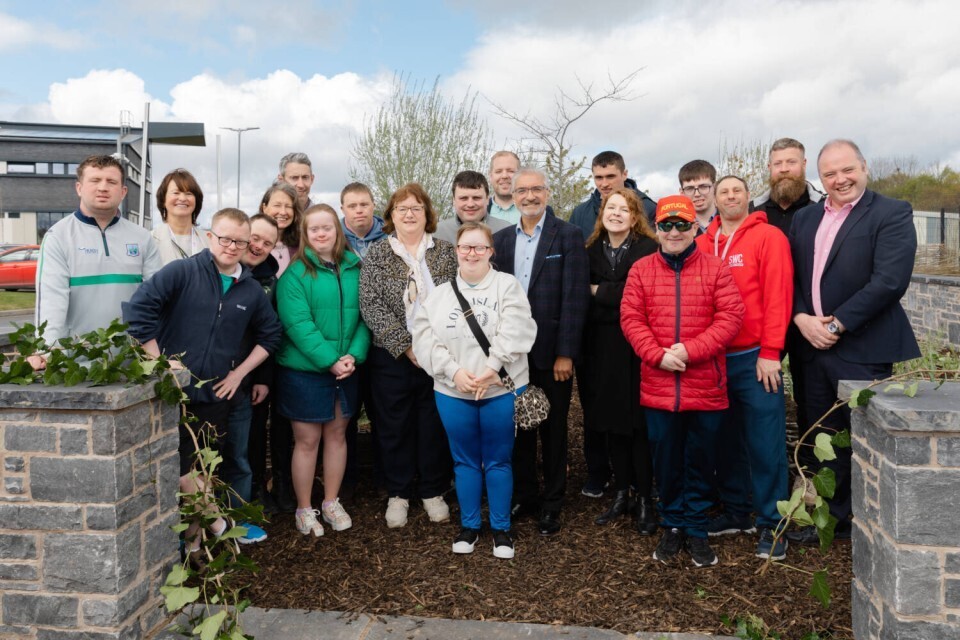
Image credit: South West College
Location: Enniskillen, Northern Ireland
Distributor: National Lottery Heritage Fund
Project: Workhouse Connect at the Enniskillen Workhouse is an inclusive heritage initiative that revitalises local history while providing vocational training for students with special educational needs.
Through heritage funding, young people were able to recreate a traditional walled kitchen garden on the grounds of a historic workhouse. This involved engaging with hands-on learning, including dry stone walling and companion planting – eventually turning it into a modern space for education and community workshops.
Impact: This project demonstrates how heritage funding – sometimes perceived as associated with large-scale restoration works – can also have an impact on local social cohesion by empowering communities.
Students who often face barriers to traditional learning were able to foster both technical expertise and lasting social connections.
Mukesh Sharma, Trustee and Deputy Chair of The National Lottery Heritage Fund and Chair of the Northern Ireland committee, said:
The enthusiasm of students and project leaders to learn about and engage with important heritage relating to their place was evident. As a result, participants have achieved new skills in built and natural heritage and developed friendships. We’re committed to supporting heritage projects that ensure everyone has access to learn, develop new skills and explore heritage.

Image credit: Romy Gregory from BFI National Lottery funded audience activity
Location: UK-wide (eight regional Film Hubs)
Distributor: British Film Institute (BFI)
Project: The BFI Film Audience Network (FAN) is a strategic initiative designed to open up access and opportunity for everyone across the UK to discover UK and independent film and screen culture, ensuring audiences have the maximum possible opportunity to watch and enjoy a rich and diverse screen culture wherever they live and whoever they are. BFI FAN is focused on local decision-making and local impact and is delivered through eight Film Hubs, based in every nation and region of the UK. For example, Film Hub North’s ‘Young Film Programmers’ scheme empowers 16 to 25 year olds to run their own screening programmes in local cinemas like the Tyneside Cinema in Newcastle and Showroom in Sheffield. Accessibility for audiences is a fundamental aim for BFI FAN, recognising that 24% of people living in the UK have a disability. Examples include audio-described screenings, descriptive subtitled screenings, BSL-interpreted and live-captioned events, relaxed screenings that make the cinema experience more comfortable for Autistic and neurodivergent people, and dementia-friendly screenings.
Impact: This initiative promotes strong community well-being alongside professional, personal and cultural development. Evaluations show that FAN projects have enabled more diverse audience engagement, fostered collaborative partnerships across local cultural organisations, and contributed to a sense of belonging in local communities. Data also shows that cinema attendance is second only to reading as the most popular form of engagement with the arts, with film watching equally linked with direct improvements in brain function, social connection, productivity and creativity.
Where your money goes
In 2025, the National Lottery generated over £8 billion in total revenue from ticket sales. The operator (currently Allwyn) pays 12% in Lottery Duty, which contributes to wider government spending, and deducts amounts for prizes and to cover agreed operating costs. Of the remainder, a substantial proportion goes to good causes, and an agreed percentage in operator profit. In 2025, £1.7 billion was granted to good causes from ticket sales.
The image below shows the expected illustrative average breakdown of where every £1 spent on the National Lottery goes over the Fourth Licence.
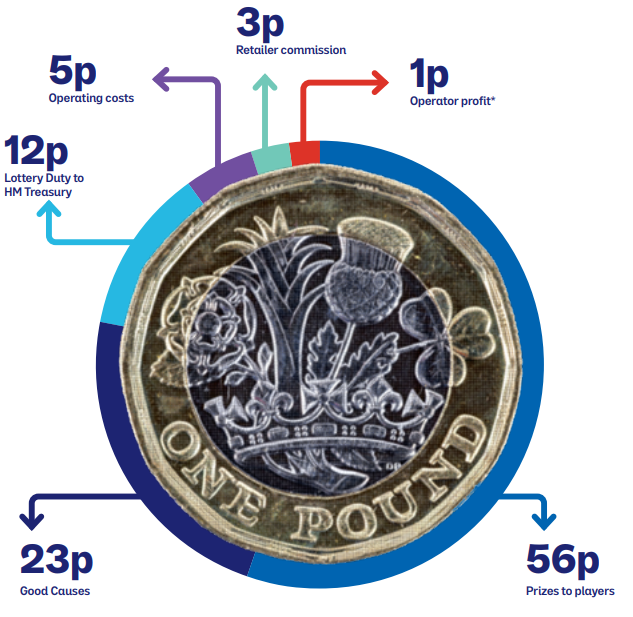
Image source: The National Lottery (2025). A Year In Play. The National Lottery 2024/2025.
The diagram is a visual representation of how each £1 spent on the National Lottery is expected to be allocated on average across the Fourth Licence, with 56p on prizes to players, 23p on good causes, 12p on Lottery Duty to HM Treasury, 3p on retailer commission, 5p on operating costs and 1p on operator profit.
This funding is distributed across four causes. These causes, the bodies which distribute funding (the ‘distributors’), and the proportion which goes to each are set out in legislation. Once the distributors receive their statutory allocation of funding, they are responsible for distributing this across the UK, on both a national and local level.
These distributors are all public bodies overseen by either the UK government or the governments of Scotland, Wales and Northern Ireland. However, they operate at arm’s length from the government and make grant decisions independently based on their own priorities and expertise. Together they award tens of thousands of grants a year to projects and organisations across the country, ranging from as little as £300 to multiple millions.
This government remains committed to the arm’s-length principle.
Table: Distribution of National Lottery good cause funding across causes and distributors (as set out in the National Lottery Act 1993)
| Cause | Statutory % split of total funding | Distributing body | Distributors % share of causes’ total funding | Total approximate awards granted* in the last 10 years |
|---|---|---|---|---|
| Arts and Culture | 20% | Arts Council England | 69.78% (of the 20%) | £2.36 billion |
| Arts and Culture | 20% | Creative Scotland | 8.9% (of the 20%) | £213.03 million |
| Arts and Culture | 20% | Arts Council of Wales | 5% (of the 20%) | £153.96 million |
| Arts and Culture | 20% | Arts Council of Northern Ireland | 2.8% (of the 20%) | £78.59 million |
| Arts and Culture | 20% | British Film Institute (UK-wide) | 13.52% (of the 20%) | £503.58 million |
| Sport | 20% | Sport England | 62% (of the 20%) | £1.94 billion |
| Sport | 20% | Sport Scotland | 8.1% (of the 20%) | £179.22 million |
| Sport | 20% | Sport Wales | 4.5% (of the 20%) | £141.12 million |
| Sport | 20% | Sport Northern Ireland | 2.6% (of the 20%) | £66.97 million |
| Sport | 20% | UK Sport (UK-wide) | 22.8% (of the 20%) | £878.13 million |
| Heritage | 20% | National Lottery Heritage Fund (UK-wide) | 100% (of the 20%) | £2.39 billion |
| Charitable activities, health, education, and the environment | 40% | National Lottery Community Fund (UK-wide) | 100% (of the 40%) | £6.23 billion |
*The ‘awards granted’ figures are calculated using the publicly accessible DCMS National Lottery Database and include awards made from 31 March 2016 to 31 March 2026. Figures shown are accurate as of 25 June 2026.
A fundamental principle guiding the distribution of good cause funding is the concept of ‘additionality’, which means good cause funding is only available to support activity for which funds would unlikely be provided by the government. In practice, this means that while National Lottery funding can support health and education-related charitable causes, it is prohibited from substituting for core statutory spending. For example, Lottery funds are not to be used for standard school budgets, NHS clinical salaries or defence spending.
Maintaining this boundary is essential for public transparency and player trust, as it guarantees that direct sales enhance society through good causes.
This government remains committed to the additionality principle.
Historical changes to good cause distribution
While the current distribution model largely reflects the 1994 framework, over the course of the last three decades there have been mergers and distributor body name changes to address shifting national priorities.
There have also been changes to good causes, including in 1998 through the introduction of the ‘New Opportunities Fund for health and education. In 2012, however, the relative weight of funding for good causes was rebalanced to more closely align with the original weighting across Arts, Sport, Heritage, and to rebuild the Community good causes focus on the voluntary and community sectors.
You can find a diagram below which demonstrates these various changes to distributor bodies across time:
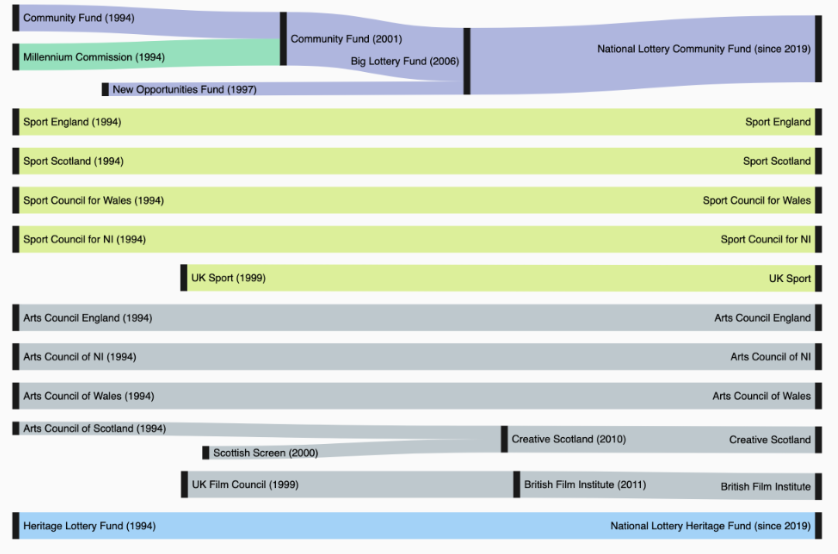
The diagram above shows various changes to the structures of distributor bodies across time. It shows that the National Lottery Community Fund was formed in 2019 from the Community Fund, Big Lottery Fund and New Opportunities Fund. The Heritage Lottery Fund was renamed the National Lottery Heritage Fund in 2019. Creative Scotland was formed in 2010 from Arts Council Scotland and Scottish Screen. The UK Film Council’s Lottery funding function was merged into the British Film Institute in 2011. The other eight lottery organisations remain unchanged since their creation in 1994, or in the case of UK Sport, in 1999.
All money raised for these good causes is held centrally in the National Lottery Distribution Fund (NLDF), launched in 1994 alongside the National Lottery. It was launched to receive and hold money generated by the National Lottery for good causes, which is then allocated at arm’s length to the above 12 Lottery distributing bodies. The NLDF is under the control and management of the Department for Culture, Media and Sport.
What do we want to achieve
We want to build, protect and grow the National Lottery for the future. The current system for distribution of good cause funding launched in 1994. It is right that after 32 years we take action to ensure it still reflects our priorities as a society, meets the needs of communities across the UK, and resonates with players. With Allwyn’s commitment to double good cause returns by 2034, the conditions are optimal for the government to undertake this review.
When we buy a Lottery ticket, we are all donating to good causes across the country, and we should all have a voice in how this money is spent. That is why we are launching this call for evidence to gather views from across the country on how good cause funding should be distributed. We will use responses to understand what the people’s priorities are for Lottery funding, what its biggest successes are and how we can protect them, and any areas we can improve even further.
Our three core objectives for this work are:
- Fund what’s important to you: Ensuring that good cause funding continues to deliver on the public’s priorities, both national and local; is benefiting communities across the country, particularly those most in need; and is having the maximum impact possible.
- Example: The National Lottery Heritage Fund’s ‘Heritage Places’ programme directly exemplifies the commitment to funding what’s important to people, by shifting power from central structures to the heart of local communities. This £200 million 10-year project moves away from one-off grant making in favour of a more ‘place-based’ approach in 20 designated locations across the UK that have historically faced under-investment. This long-term investment ensures that heritage is not just preserved, but used as a tool to improve local housing, jobs and well-being. This includes the ongoing Sauchiehall Street renovation in Glasgow, where funding is being used to revitalise a main street to drive economic and social renewal based on community needs.
- Empower your communities: Identifying opportunities to give communities a greater voice in how good cause funding is spent, ensuring that it is focused on what is important to them. Making it easier for communities and smaller organisations to access funding, including potentially through small and micro grants.
- Example: Sport England’s ‘Place Partnerships’ programme represents a fundamental shift in how we are seeking to empower local people, moving away from rigid national templates to funding shaped by lived experience. Instead of making small community groups compete for complex national grants, this model builds long-term partnerships in specific areas across England with the greatest need, giving residents a direct voice in how investment is used. A prime example of this model in action is the ‘Move Together Blackpool’ partnership, where more than 150 cross-sector leaders and 20 youth participants are collaborating to break down silos, elevate local voices. Through this shared network, the partnership has been able to directly fund grassroots initiatives like ‘House of Wingz’, a youth-led organisation that uses street dance, skating and creative arts to reach families who often feel excluded from traditional sports settings.
- Simplify access: Reducing bureaucracy and improving efficiency to make sure that as much of the funding generated as possible goes to communities and is being spent effectively. This includes identifying any opportunities to benefit from technological advances.
- Example: A practical example of this objective is shown by the ‘Awards for All Scheme’ operated by The National Lottery Community Fund (TNLCF). This aims to simplify and streamline funding to make it more efficient for grassroots organisations. Recognising that small groups and volunteers often struggle with the administrative hurdles of applications, the scheme uses a simplified digital application process and a ‘single-stage’ decision model to ensure funds are granted as quickly as possible. A powerful example of this streamlined approach in action was the recent funding provided for the Windrush 75th Anniversary.
While our 12 National Lottery distributors are constantly innovating to meet these objectives, we recognise that the National Lottery belongs to the public. We want to build on their successes by using this call for evidence to listen to as many voices as possible. Your views will ultimately help us protect the National Lottery’s unique position and heritage while ensuring it remains strong, inclusive and ready for the next 30 years of service to the public through good cause funding.
Scope
This is a wide ranging review and we are seeking views and information to help us best deliver on each of our objectives. Our findings will inform detailed policy proposals to be published in due course.
We want to hear what people value in the current system, as well as those areas that we could improve on. This includes views on how good cause funding is distributed, what it is spent on and the experiences of individuals, organisations and communities in accessing or attempting to access funding.
It is important to us that this includes the views of the organisations and communities in every part of the country, including those who have and have not benefitted from National Lottery funding. We are delivering a programme of targeted engagement with these groups alongside this call for evidence to achieve this.
This is a UK-wide review focused on distribution of National Lottery good cause funding. As many of the Lottery distributing bodies are spread across the UK, we are committed to working with the devolved governments as part of this call for evidence and beyond.
How to respond
The call for evidence will run for 12 weeks, closing at midday on 23 September 2026. We are seeking a wide range of views from both organisations and individuals. To make the process as straightforward as possible, our response will automatically guide you to the relevant questions based on the capacity in which you are responding.
Only people aged 16 and over can participate in this survey. By proceeding, you confirm that you meet this requirement.
This survey takes approximately 15 to 20 minutes to complete. You do not need to finish in one go; you can save your progress by closing the window and returning via the link later. Please note that incomplete responses will be automatically closed and recorded one week after your last entry, and all submissions must be finalised before the survey closes to be included in our results.
Responses to the call for evidence can be submitted in the following ways:
Online survey (preferred)
We strongly encourage responses via survey. This is the simplest and easiest way to respond. If you begin the survey but do not formally submit it, your partial responses may still be saved and considered as part of our final analysis.
By email or post (alternative methods)
If you wish to share any further information with us relating to the questions contained within the survey, you can do so:
-
By email- please title your email: ‘National Lottery Good Causes – Fund What Matters To You’. Responses via this method should be sent to: lottery-good-causes@dcms.gov.uk
-
By post- Please state the subject of your letter as: ‘National Lottery Good Causes – Fund What Matters To You’. If you decide to send a written hard copy response, this should be sent to:
National Lottery Good Causes Team
The Department for Culture Media and Sport
100 Parliament Street, London
SW1A 2BQ
The government asks respondents to note that this call for evidence is focused on distribution of good cause funding. Respondents are invited to submit their views on the topics raised in this document, however you may also wish to share any broader insights you feel relevant to this issue.
All responses will be considered in depth, but it will not be possible to give substantive replies to individual representations. We reserve the right to utilise AI to assist with the thorough analysis and thematic grouping of the high volume of responses expected.
Privacy notice
Who is collecting my data
The Department for Culture, Media and Sport (DCMS) are the recipients and holders of the data collected through completion of this call for evidence (CfE).
The CfE is built on the Qualtrics system, a third-party online survey system licensed by DCMS. Qualtrics will also hold the data provided up to 90 days after DCMS deletes the survey from the Qualtrics system.
This CfE is being carried out to gather evidence as part of a wider engagement exercise on National Lottery Good Causes, entitled: “National Lottery Good Causes – Fund What Matters To You”, and will be analysed, alongside other forms of evidence gathering, to inform the outcomes and recommendations.
Purpose of this privacy notice
This notice is to explain your rights and give you the information you are entitled to under the Data Protection Act 2018 and United Kingdom General Data Protection Regulation (“the Data Protection Legislation”). This notice sets out how we will use your personal data.
What is personal data
Personal data is any information relating to an identified or identifiable natural living person, otherwise known as a ‘data subject’. A data subject is someone who can be recognised, directly or indirectly, by information such as a name, an identification number, location data, an online identifier, or data relating to their physical, physiological, genetic, mental, economic, cultural, or social identity. These types of identifying information are known as ‘personal data’. Data protection law applies to the processing of personal data, including its collection, use and storage.
What personal data do we collect
The personal information we will collect and process is provided to us directly by you through your responses to the CfE. The personal information – if you choose to provide it – we are collecting through the CfE include:
The personal data of individuals
- Regional location (e.g. north east england /south east wales) and the option to include your postcode.
- Age range
- Gender or self-description
*If you are answering on behalf of an organisation, we will also ask for details about your organisation. This will not be information that can identify you.
Responses will be anonymised.
DCMS will only have access to an anonymised data set that will hide your IP address, location data and contact information, as this personal information may identify you.
By default the Qualtrics Survey system will store your browsing data such as your IP address in the form of internet cookies. A description of how Qualtrics uses cookies and similar technologies to collect and store information is available in their cookie statement, which opens in a new window.
While some requested profile information (such as age range, regional location, and gender/self-description) could be considered personal data, the collected responses will be fully anonymised by default by Qualtrics upon submission and cannot be used to identify you. Qualtrics anonymisation works by erasing your technical data (IP address and location metadata), effectively disconnecting this data from the submitted response, before saving the record to the database. This ensures the responses cannot be linked back to the survey participant.
The CfE contains different methods to ask for information from you, including multiple choice drop down boxes and free text boxes that allow you to put your responses into your own words – It is important that you do not put any information that can personally identify you in the free text boxes. Any personal information that you manually write into the free text boxes will not be automatically anonymised by the Qualtrics system, as the system only automatically removes technical data (metadata)which would mean that your CfE response may not be anonymous and may be shared with a third party AI model (details below) for the purpose of analysis.
For email responses: the response will be run through a data desensitising tool to find and strip Personally Identifiable Information (PII) such as names, email addresses, and signatures before extracting an anonymised response for analysis.
For hard copy/postal responses: the response will be scanned into the system, identifying information will be removed by the data desensitising tool, and the anonymised response will then be included for analysis.
How we will use your data
We will use your data to collect evidence that informs the outcomes of the CfE. DCMS may choose to publish data tables that show high-level data using responses from this survey, where it is appropriate to do so. The data tables will not identify individuals or organisations who have responded to the CfE.
The legal basis for processing your data
To process this personal data, our legal reason for collecting or processing this data is: Article 6(1)(e) it is necessary to perform a public task (to carry out a public function or exercise powers set out in law, or to perform a specific task in the public interest that is set out in law):
There are further requirements for processing more sensitive, or ‘special category’, personal data. You can find out more about these bases for processing personal data by consulting the Information Commissioner’s Office (opens in a new window). This survey does not seek to collect special category data.
What will happen if I do not provide this data
You may still complete the survey, but the personal data you choose not to provide will not be included in the demographic analysis of responses.
Who will we share your data with
We will be using Qualtrics, an online survey platform to carry out this survey. You can find out more about how Qualtrics may use your personal information by reading the Qualtrics Privacy Statement (opens in a new window).
Your personal data will not be sent overseas.
How long we will keep the data
The data provided will be held only until the completion of the CfE. This is so that DCMS is able to analyse the responses to fully inform this work and any subsequent work undertaken by the Department as a result of its outcomes. The information you provide will be anonymised before inclusion in any reports, and you will not be identifiable.
Your personal data will be anonymised by default by Qualtrics upon submission, the data will then be stored in a secure government IT system and on the Qualtrics online survey platform. After completion of the review, all data will be deleted from both DCMS systems and Qualtrics. Qualtrics commit to delete all backups of said data for disaster recovery purposes within 90 days.
The survey will record incomplete survey responses and close survey access after the survey expiration date.
Will my data be used for automated decision making, or profiling or Artificial Intelligence (AI)
AI is an umbrella term for a range of technologies and approaches that often attempt to mimic human thought to solve complex tasks. Things that humans have traditionally done by thinking and reasoning are increasingly being done by, or with the help of, AI.
We will use a large language model (LLM) to process free-text responses. LLMs are Artificial Intelligence (AI) systems trained on vast amounts of text data. They can understand and generate human-like text for various tasks such as answering questions, writing content, and translating languages. While very capable at processing and producing language, they operate based on pattern recognition and prediction.
The model will help DCMS to understand the emerging themes and evidence from the survey results.
Our use of AI is governed by policies and procedures that address data security, privacy, and responsible AI usage.
The model will do this by collating the mass of responses to each question and providing a summary report of themes and insights and their frequency DCMS may then prompt the LLM to further break down results by cross-referencing with provided profile data, this is crucial for our understanding of the views and opinions of the wide demography of respondents. There will be no additional data sharing considerations as a result of using a LLM.
There is no automated decision making involved in the use of this model.
What are your data protection rights
You have rights over your personal data under the UK General Data Protection Regulation (UK GDPR) and the Data Protection Act 2018 (DPA 2018). The Information Commissioner’s Office (ICO) is the supervisory authority for data protection legislation, and maintains a full explanation of these rights on their website.
DCMS will ensure that we uphold your rights when processing your personal data.
Responses will be anonymised by the Qualtrics survey system and a data desensitising tool for other formats of submission. At this point the data will be fully anonymised and will no longer be considered personal data
How do I complain
Data Controllers Title:
The DCMS Lottery Good Causes Team
Data Controllers Address:
Department for Culture, Media and Sport
100 Parliament St
London
SW1A 2BQ
Email: enquiries@dcms.gov.uk
The contact details for the data controller’s Data Protection Officer (DPO) are:
Data Protection Officer
The Department for Culture, Media & Sport
100 Parliament Street
London
SW1A 2BQ
Email: dpo@dcms.gov.uk
If you’re unhappy with the way we have handled your personal data and want to make a complaint, please write to the department’s Data Protection Officer or the Data Protection Manager at the relevant agency. You can contact the department’s Data Protection Officer using the details above. Should you wish to make contact, please make clear in the subject line or the top of your correspondence that it is regarding participation in the ACE review survey.
Read the DCMS personal information charter.
How to contact the Information Commissioner’s Office
If you believe that your personal data has been misused or mishandled, you may make a complaint to the Information Commissioner, who is an independent regulator. You may also contact them to seek independent advice about data protection, privacy and data sharing.
Information Commissioner’s Office
Wycliffe House
Water Lane
Wilmslow
Cheshire
SK9 5AF
Visit the Information Commissioner’s Office website
Telephone: 0303 123 1113
Any complaint to the Information Commissioner is without prejudice to your right to seek redress through the courts.
Changes to our privacy notice
We may make changes to this privacy policy. In that case, the ‘last updated’ date at the bottom of this page will also change. Any changes to this privacy policy will apply to you and your data immediately.
If these changes affect how your personal data is processed, DCMS will take reasonable steps to let you know.
This notice was last updated on 9 June 2026.
This content is sourced from www.gov.uk and is shared for informational purposes only.