Children’s access to live music a ‘postcode lottery’, research shows – Arts Professional
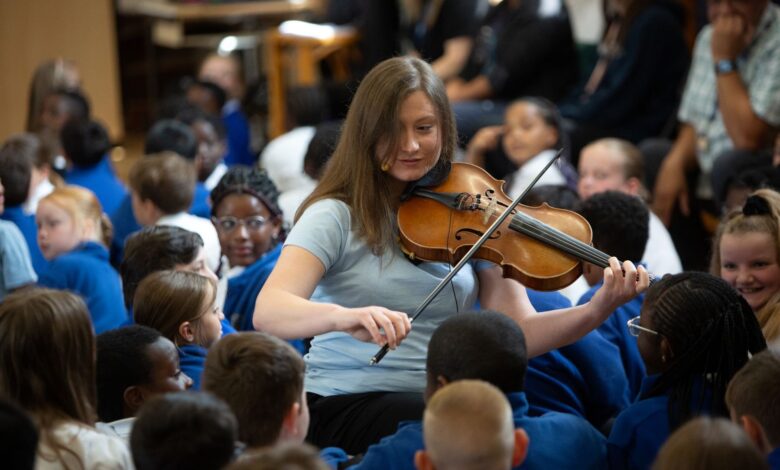
Fewer than half of state school children in the North East have seen live music in the last year, new research shows.
Data compiled by music charity Playground Proms found 43% of surveyed children aged 7-11 living in the North East experienced live music in the last year, compared to 68% of those living in Greater London.
The research, collected from 1,000 state school children in Key Stage Two, found live music attendance sat between 50% and 57% in most regions, which the report said highlighted a “clear postcode lottery” in terms of attending music events.
An estimated two million children in the UK do not get to experience live music, with cost and location preventing access for two in five primary school pupils, the research found.
Among those who have not attended live music, 43% said tickets are too expensive, while 37% said events are too far away or difficult to get to.
The founder of Playground Proms, which delivers interactive classical music workshops in state primary school playgrounds, Cathal Ó Dúill, said access to “something as fundamental as music” being dependent on geography and finances is not just “a cultural gap” but “a systemic failure”.
He said: “For too many children, particularly those in deprived areas, live music is not a regular part of life – in fact, it is often completely absent.”
Access ‘increasingly unequal’
Ó Dúill commended the introduction of the Royal Academy of Music’s foundation year for talented young musicians, saying it was both “welcome and telling”.
“It recognises something many of us working on the ground already know: access to music in this country is becoming increasingly unequal”.
The Royal Academy of Music’s new one year programme, which is only open to state-educated pupils aged aged 18-20 who have experienced “financial or other barriers to opportunity”, has received criticism in the national press for excluding private school pupils, regardless of circumstances.
Chair of the Heads’ Conference and headmaster of Bolton School Philip Britton told The Mail on Sunday there are “plenty of less well-off people in independent schools and plenty of privileged people in state schools”.
However, Ó Dúill hailed it as “an important intervention at the top of the pipeline, helping talented young people who might otherwise fall through the cracks”.
He said it was important to make changes “much earlier” as well, adding: “If children are not exposed to music in the first place, they will never reach the point of applying to conservatoires.”
Ó Dúill also called for a joined-up approach, with “investment in schools, support for teachers, and sustained funding for outreach work” sitting alongside initiatives like the Royal Academy’s foundation year.
Music education on the decline
The research also highlighted a decline in music education, showing nearly three in ten (29%) of state school children surveyed did not have access to a musical instrument they can practise on.
Among those without access, 66% said they would like to learn an instrument.
Since launching in 2021 , Playground Proms has reached around 150,000 pupils in more than 500 schools, with the aim to bring performances to where the children are, rather than “asking them to come to concert halls”.
This content is sourced from www.artsprofessional.co.uk and is shared for informational purposes only.