NHS eye exams and ‘postcode lottery’ for glaucoma care discussed in Health Bill’s second reading
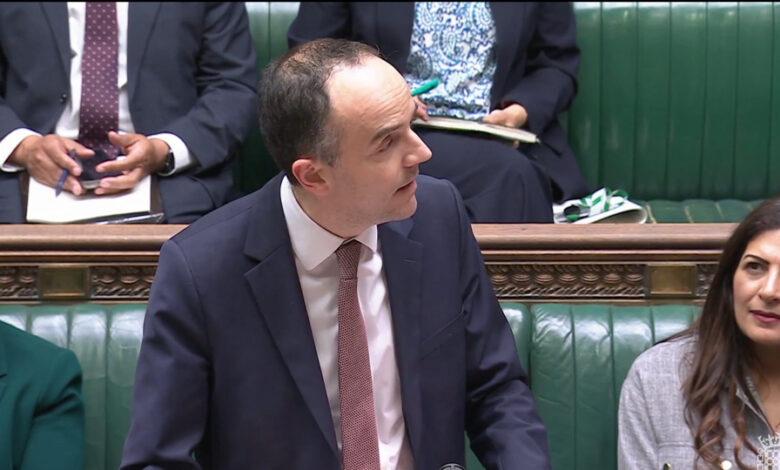
The postcode lottery for glaucoma care and eligibility for NHS eye examinations were discussed when the Health Bill received its second reading on Monday 1 June.
Speaking after health and social care secretary James Murray had presented the bill’s second reading, Shockat Adam MP noted that Clause 14 of the bill gives integrated care boards (ICBs) new responsibilities over primary care services.
The bill transfers commissioning of NHS sight tests from a national framework to individual ICBs, Adam highlighted.
Raising his concerns over this move, Adam told MPs: “I completely understand the logic of localisation, but I have already seen what happens in practice.
“In Coventry and Warwickshire, a community urgent eye care service that was diverting more than 13,000 A&E attendances per year was withdrawn at the end of 2025. In Hampshire, community glaucoma schemes have been moved back into hospitals. This is the postcode lottery in action.”
Adam also used the opportunity to ask that “the single patient record supports consistent clinical decision making across the glaucoma pathway.”
Glaucoma affects approximately 700,000 people in the UK, around half of whom are undiagnosed, Adam told MPs.
However, the technology now exists to “address it more efficiently than ever,” he said.
Adam explained that the iStent inject device can be inserted during routine cataract surgery in a single procedure, treating both cataracts and glaucoma simultaneously.
“This is exactly the kind of innovation that the 10-Year Health Plan calls for, yet uptake is inconsistent because there is no national commissioning guidance.”
Adam added: “I urge the Government to ensure that the single patient record supports consistent clinical decision making across the glaucoma pathway, and that integrated care boards are required, not merely permitted, to commission those procedures.”
Eye care was also raised by Wendy Morton, MP for Aldridge-Brownhills, in the context of the abolishment of NHS England – which is also included in the bill.
“The point about ICBs and the devolution of responsibility for NHS eye tests is one that we often forget to talk about in this place, as is the case with eye care – I know that there are some ophthalmic experts in the Chamber,” she said.
Morton asked Murray if he would “assure me that the changes will not result in a postcode lottery in the provision of eye care tests?”
She added: “At the end of the day, NHS sight tests are a universal entitlement, so can he ensure that that will continue?”
In response, Murray noted that “local services are already commissioned locally in many cases.”
He added: “The changes that we are making by abolishing NHS England will mean that more power and resources go to ICBs and local areas to allow them to make the right choices for their local area.
“That is a way of bringing the services that we deliver closer to the people who need them.”
Data and patient protection in the single point of access
The single point of access, which is a key provision of the Health Bill, was debated in depth during the session.
In opening, Murray noted that: “In other areas of our lives, getting information wrong or not having it immediately available may be an inconvenience; in a health service, the consequences can be profound.”
He explained that healthcare practitioners are currently “doing everything they can to try to solve a puzzle, but without all the pieces.”
Introducing the single patient record “is nothing short of a game changer,” he said.
MPs raised questions around security and how patients’ data will be protected, with Dame Chi Onwurah MP highlighting that “many projects such as the single patient record have failed over the last 20 years.”
Onwurah asked Murray if he could ensure that the single patient record will be “treated as critical national and sovereign infrastructure, not subject to capture by a single provider such as Palantir?”
In response, Murray emphasised that the single patient record will “build links between systems so that one person, whether a clinician or a patient, can see all the data at once,” rather than moving data from one system to another.
Data will be governed by the same privacy policies that are found in a GP or a hospital trust system, he said.
Murray added: “When linked together through the single patient record, it will be governed by the highest levels of security: only authorised individuals will be able to access the data, there will be an audit trail of anyone who has accessed it, and the cyber-security protection will be the strongest available.”
He emphasised: “Information is stored on individual systems – in GPs, hospitals and so on. The single patient record links them up and will be delivered through a range of different contracts to make sure that the system works in the interests of clinicians and patients.”
Julie Minns MP noted that her constituents in Cumbria often register with GPs across the border in Scotland.
As the single patient record applies to the NHS in England, patients’ records will not necessarily “flow with them,” Minns said.
Minns asked if Murray will work with colleagues in Scotland and Wales “to ensure that we get this right for anyone, regardless of where they live?”
In response, Murray noted that his ministerial team are having “regular conversations with our counterparts in Scotland and in other devolved Governments to ensure that we are working on such cross-border issues wherever we can.”
Karin Smyth MP, the minister of state for secondary care, noted that: “although the Bill establishes the legal framework for the single patient record, much of the detail will be in secondary legislation.”
She emphasised: “The bill puts more power, not less, in the hands of local organisations.”
ICBs will be responsible for commissioning a wider range of services, including primary care, and will hold more than £179 billion of the NHS’ current £202 budget, she said.
The bill will now progress to the Public Bill Committee stage, which will conclude on Thursday 16 July 2026.
This content is sourced from www.aop.org.uk and is shared for informational purposes only.