Jamaica Included in U.S. ‘Pause’ on Certain Visas – The Provincetown Independent
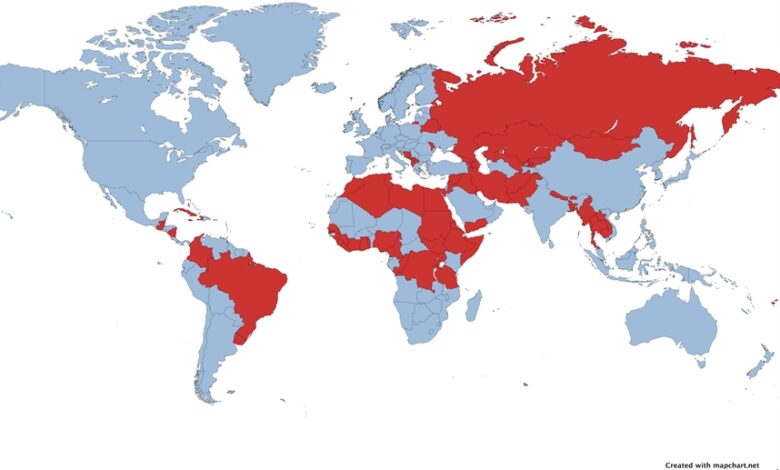
PROVINCETOWN — The U.S. State Dept. announced on Jan. 14 that it would “pause” visa processing for all immigrants from 75 countries because, the agency said, their citizens posed a “high risk of public benefits usage” in the future.
The agency did not explain how it selected the 75 countries, which included a confounding mix of allies such as Jordan, Kuwait, and Thailand; enemy states including Cuba, Russia, and Iran; and countries that rarely make the news for any reason, such as Belize, Bhutan, and Montenegro.
One of the 75 countries was Jamaica — which was an unwelcome surprise to the Outer Cape’s large Jamaican community.
“Everybody’s nervous right now — people don’t want to talk about it,” said David Brown, the pastor of the predominantly Jamaican congregation at the Pond Village Community Chapel in Truro.
“You don’t know what the future holds,” said Brown. “You’re just living day by day.”
The new policy, which went into effect on Jan. 21, will not affect the many Jamaicans who come to Cape Cod for seasonal work because the visas that allow that, including the J-1 exchange visa and the H-2B work visa, are not classed as “immigration visas,” according to Framingham immigration attorney Keith Pabian.
Nonetheless, the freeze on immigration visas is “just another hit to the consular system,” said Pabian — and is also the first time that Jamaica has been singled out in this way. It sends a message “that their community isn’t as valued as I think they should be,” he said.
In a social media post announcing the policy, the State Dept. wrote that “migrants take welfare from the American people at unacceptable rates. The freeze will remain active until the U.S. can ensure that new immigrants will not extract wealth from the American people.”
Brown agreed that the policy sends a clear and hostile message to Jamaicans. “You can’t come to any other conclusion than ‘You’re not welcome here,’ ” said Brown.
“People from all over the world, including Jamaica, have played such an integral role in the development of this country,” said the pastor. “Now this is throwing that in our face.”
Family Visas
Brown’s story on Cape Cod began 35 years ago as part of the second group of Jamaican workers to arrive in Provincetown in 1990, he said — adding that even then there was a “cry for workers on the Cape.”
After more than a decade of splitting time between here and Jamaica, Brown said, the aftermath of the Sept. 11 attacks made traveling between the two countries more difficult. Around that time, he also realized that “more people know me here in America than know me back in Jamaica,” he said.
His daughter, who was born in the U.S. and studied at Brandeis University, eventually petitioned for Brown and his wife to get green cards, he said. Now he fears for fellow Jamaicans stuck in the middle of that process.
“Imagine you have your loved one back home and something happened,” he said. “They can’t come here to see you. You can’t go there to see them.” People fear that “if you leave, you can’t come back,” he said.
Neily Bowlin, who is originally from Black River, Jamaica but now lives in Wellfleet, told the Independent that the urgency felt by some to get family members out of Jamaica after Hurricane Melissa devastated parts of the country in October has grown.
“A lot of people have intensified their process to get their loved ones out of Jamaica,” said Bowlin. “For it to be on a pause now, it just makes the visa backlog even greater.”
The immigration visas that are now on pause include essentially all immediate relative and family-sponsored visas, along with the diversity immigrant visa, more often called the “green card lottery,” that was created by an act of Congress in 1990.
“It’s a huge impact on the people who are filing” for family visas, said Bowlin.
Riko Belafonte, who is originally from St. Andrew, Jamaica but now lives in Provincetown year-round, said the administration’s argument that Jamaicans rely on public benefits is wrong.
“Most immigrants in the community work pretty hard and actually contribute way more than they take, especially in Provincetown,” said Belafonte, who holds a green card.
The State Dept. has not said what data or information it used to select the 75 countries on its list.
A Chilling Effect
Although the immigration visa freeze may not affect the ability of seasonal workers to come to Cape Cod this year, it could still affect their interest and willingness, Pabian said.
“I think it’s just going to further make people wonder if they should be here, especially if they don’t have to be,” said Pabian. “The Outer Cape is so heavily reliant on foreign nationals. Stuff like this just isn’t helpful.”
Belafonte agreed. “Some of my friends are thinking that with everything happening in America right now, it might not be the best place for them to come and work anymore,” he said.
Pabian told the Independent that he’s also heard from clients who are struggling to find J-1 visa workers this year. Overseas students in particular are “going to other countries because of the news” here, he said.
Liz Lovati, who owns Angel Foods and Liz’s Cafe in Provincetown, said that she doesn’t think she’ll have a hard time finding foreign workers this season. People who live in western Jamaica, where Hurricane Melissa was the most destructive, have an especially great need for work, she said.
“There’s absolutely no shortage of people who want to come to Provincetown,” said Lovati, adding that she gets more new résumés than she can manage.
Paul Niedzwiecki, the CEO of the Cape Cod Chamber of Commerce, also said that he doesn’t expect to see a major change in the number of overseas workers here this summer — although he described a “level of concern” as federal immigration policies continue to shift.
Niedzwiecki said he’s been closely following changes to the J-1 program, which brings 5,000 international college students to Cape Cod each summer for work and travel.
“Cape Cod still remains a highly attractive destination for students,” said Niedzwiecki. But he also pointed to the “enhanced social media vetting” of student visa holders that the State Dept. implemented last summer — which includes searching applicants’ social media accounts for their views on international affairs.
Bia Molina, the owner of the South Florida-based visa agency MTL International Work and Travel, told the Independent that the shifting immigration landscape has already caused a difference in the type of applicants for H-2B visas this year.
“Europeans who have the ability to work in Europe are sitting out a season,” said Molina, who said she does not have clients on Cape Cod but has many in Rhode Island.
She has “absolutely” heard from employers struggling to find workers, she said.
“This country has to continue to go to restaurants, and dishes need to continue to be washed, and grass needs to continue to be cut,” Molina said, referring to two of the “difficult to fill” jobs that can be legally performed by H-2B visa workers. The Dept. of Labor, which runs the H-2B program, needs to “get on the phone, now” with the agencies that are deterring workers from coming here, she said, “because nobody’s giving up their golf game — not in this lifetime.”
This content is sourced from provincetownindependent.org and is shared for informational purposes only.