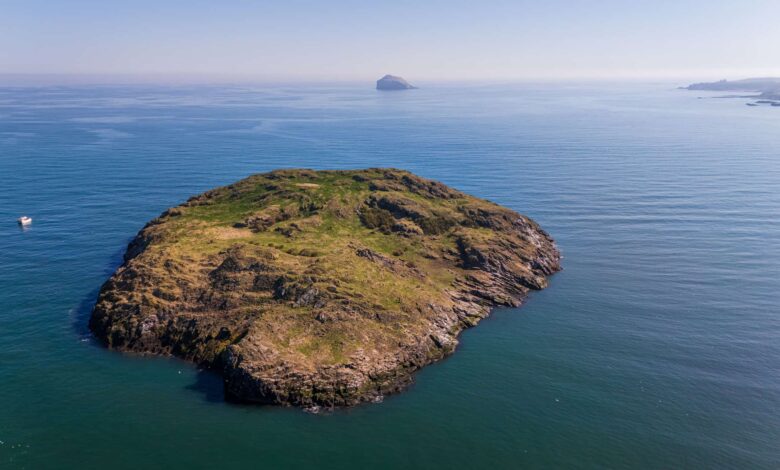
As the future of Bass Rock and Craigleith islands are secured for future generations of people (and gannets and puffins), discover our legacy of funding marine habitats.
The UK’s seabirds face tougher challenges every year, including threats from diseases like avian flu, invasive species, pollution and over-fishing. At the same time, interest in birdwatching is up 47% since 2018 according to the RSPB, and has increased more than ten-fold among Gen Z (16–29 year olds).
This makes projects that conserve the UK’s delicate coastal habitats more important than ever. Here are five places which have used National Lottery funding to do just that.
Settled future for seabird colonies on Bass Rock and Craigleith islands
Bass Rock’s population of around 100,000 gannets and Craigleith’s puffin colony draw visitors to the Scottish Seabird Centre in the Firth of Forth. Thanks to the National Heritage Memorial Fund, RSPB Scotland has now secured the future of the islands in charitable ownership.
Funding from us is now helping the organisations work together on developing plans for an immersive new viewing theatre at the centre, inclusive boat trips and outreach to compile community memories of the iconic islands. Monitoring and research of the wildlife populations will further build understanding of the current needs and challenges of seabird species and habitats.
Improving organisational resilience at the Scottish Seabird Centre
In 2024 the Scottish Seabird Centre used a £250,000 grant from us to make its operations fit for the future, including through installing renewable energy sources and hiring new staff in partnerships and development roles. It’s also working to broaden its visitor and member base through an expanded events and activities programme.
Monitoring seabirds on Skomer and Skokholm Islands
One of the first National Nature Reserves in south Wales, Skomer Island off the Pembrokeshire coast, is an important habitat for species including puffins and Manx shearwaters.

Nearby Skokholm Island is a bird observatory for monitoring populations and migration patterns – it was the UK’s first such site when established in 1933. Like Bass Rock and Craigleith islands, the National Heritage Memorial Fund also helped bring Skokholm Island into charitable ownership.
Our support for the Wildlife Trust of South and West Wales, which manages the islands, included £1.6m in 2004 to improve interpretation and visitor accommodation on Skomer Island, and emergency support in June 2020 so that wardens on both islands could continue monitoring breeding seabirds during the coronavirus (COVID-19) pandemic.
‘Puffarazzi’ snaps further puffin conservation efforts
We awarded Project Puffin £50,000 for a citizen science research study that tracked puffin diets. In 2017 the RSPB encouraged members of the public – the ‘puffarazzi’ – to submit photos of puffins carrying fish for their chicks which were then analysed by volunteer ‘puffineers’.
Together with GPS tracking and puffin censuses, the research provided evidence to help protect these seabirds by showing for the first time the quantity and variety of food they eat across 27 colonies in the UK and Ireland.
Increasing access at RSPB Bempton Cliffs
During breeding season these chalk cliffs on the Yorkshire coast are bustling with gannets, kittiwakes and puffins. Between 2013 and 2017 we supported the RSPB’s work on building a new visitor centre and upgrading viewing platforms and paths with £670,000 in funding.
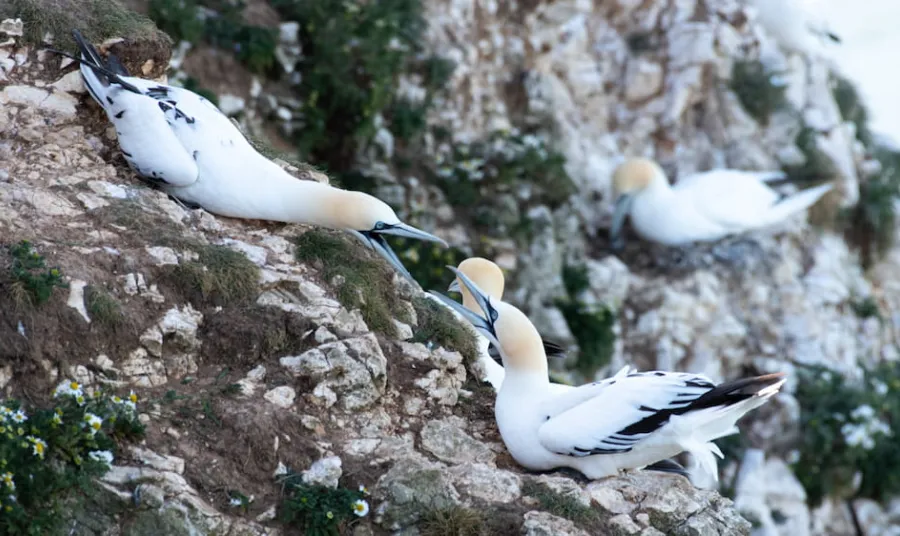
Proactive public engagement attracted visitors and volunteers to the centre, which was busier than ever before in the years after reopening. Additional staff capacity also improved wildlife monitoring at the site, which is the UK’s largest mainland seabird colony.
Our support for landscapes, habitats and species
Since 1994 we have awarded over £2.2billion of National Lottery and other funding to 5,100 land, nature and biodiversity projects across the UK.
Discover stories from some of these projects on our landscapes, parks and nature hub.
This content is sourced from www.heritagefund.org.uk and is shared for informational purposes only.