Powerball player running out of time to claim $100,000 prize in New Hampshire – The Boston Globe

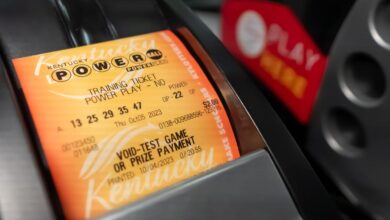
One lucky lottery player in New Hampshire who won $100,008 nearly a year ago is running out of time to claim their hefty prize.
Somebody who bought a Powerball ticket at the Circle K on Central Avenue in Franklin, N.H., earned the six-figure sum on Sept. 6, 2025, by matching four out of the five white-ball numbers and the red Powerball number while also using the game’s “Power Play” feature, which doubled the $50,000 base prize amount, according to New Hampshire Lottery officials.
The deadline for the winner to step forward and claim this prize will expire on Sept. 7, 2026, so New Hampshire Lottery Executive Director Charlie McIntyre released a statement Friday nudging players to double check their pockets, glove compartments, and kitchen drawers for the valuable ticket. The winning numbers were 11, 23, 44, 61, and 62, with a Powerball of 17.
This wouldn’t be the largest unclaimed prize in New Hampshire Lottery history. In 1987, a Tri-State Megabucks player never stepped forward to claim their $2 million jackpot, which would be worth the equivalent of roughly $5.9 million today, when adjusted for inflation.
When a prize goes unclaimed in New Hampshire, the money does not roll over into a bigger jackpot. Instead, it’s used by the state to support public education, officials said.
Overall, the lottery revenues being generated for the state’s education system have more than doubled in the past decade, reaching about $209 million in fiscal year 2025, according to the New Hampshire Lottery Commission.
Meanwhile, the state’s core education funding mechanism has come to rely more heavily on lottery revenues. The Education Trust Fund got nearly 17 percent of its money from the lottery in fiscal years 2023 and 2024, which is about twice what the share had been a decade ago, according to the New Hampshire Fiscal Policy Institute.
The nonprofit institute’s analysts, Matthew Swenson and Nicole Heller, wrote in 2025 that the state’s reliance on the lottery for K-12 education can create budgetary uncertainty, given the potential for shifts in consumer preferences and spending habits. They said policymakers may also wish to consider how the lottery is associated with gambling addiction and disproportionately impacts people of low and moderate incomes.
“Although the lottery is voluntary,” they wrote, “participation is correlated with financial illiteracy, introducing equity concerns.”
This article appears in Globe NH | Morning Report, a free newsletter focused on news about New Hampshire, including coverage from The Boston Globe and links to articles from elsewhere. To get the email, sign up here.
Steven Porter can be reached at steven.porter@globe.com. Follow him @reporterporter.
This content is sourced from www.bostonglobe.com and is shared for informational purposes only.