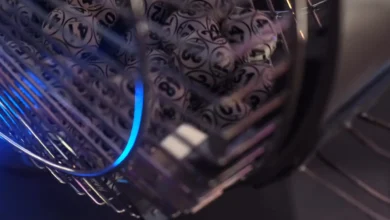
Former Texas Lottery chief heads to court. Here’s how the agency’s troubles unfolded

More than three years after a group of gamblers spent millions of dollars buying nearly every possible combination for a Texas lottery drawing, the fallout is moving into a new phase: criminal court.
Gary Grief, the former longtime executive director of the Texas Lottery Commission, faces a first-degree felony charge of abuse of official capacity over the April 2023 Lotto Texas drawing. The commission itself — an agency that no longer exists — has also been indicted on the same charge.
The cases stem from a Texas Rangers investigation into a $95 million jackpot that set off years of scrutiny over how the state lottery was run, its relationship with private lottery businesses and the commission’s role in facilitating the massive ticket purchase.
The controversy eventually helped lead Texas lawmakers to abolish the Lottery Commission altogether.
A pretrial hearing is scheduled for Friday morning. Here’s how we got here.
A $95 million jackpot — and millions of tickets
The controversy traces back to a lottery drawing on April 22, 2023.
The jackpot had climbed to $95 million. Unlike games such as Powerball and Mega Millions, however, Lotto Texas has a relatively limited number of possible combinations: 25,827,165.
That created an unusual opportunity: If someone could purchase nearly every possible combination, they would very likely hold the winning ticket. And according to reporting from the Houston Chronicle, a group operating under the name Rook TX did just that, spending roughly $26 million to buy nearly every possible number combination.
More than 25 million tickets were processed at just four Texas lottery retailers over several days. One matched all six winning numbers, yielding roughly $57.8 million in cash before taxes.
The strategy itself wasn’t necessarily illegal. But questions soon emerged about how the group had been able to print so many tickets in such a short period. According to the Houston Chronicle, lottery officials provided additional terminals and ticket paper to retailers involved in the bulk purchase.
The commission initially defended the drawing, saying an investigation found no violations of state law or lottery rules. But investigators later determined that some retailers used unauthorized QR codes to process the bulk purchases.
Scrutiny turns to lottery couriers
The 2023 drawing also brought new scrutiny to lottery courier services, which allowed customers to order tickets through websites or smartphone apps. Couriers would arrange for physical tickets to be purchased at licensed retailers and send customers digital copies.
Couriers had operated in Texas since around 2015 and accounted for an estimated $173 million in lotto ticket sales in fiscal year 2023. While state law prohibited playing the lottery “by telephone,” couriers argued they were simply purchasing physical tickets on customers’ behalf.
The commission allowed couriers to operate for years, drawing criticism from lawmakers who argued the agency had effectively permitted online lottery sales without legislative approval.
As lawmakers investigated both couriers and the 2023 bulk purchase, the commission reversed course. In February 2025, it declared courier services illegal and moved to revoke the licenses of retailers that worked with them. This prompted a lawsuit from a lottery courier challenging the new rules.
Leadership turmoil and the end of the commission
The controversy quickly engulfed the agency.
Commissioner Clark Smith resigned in February 2025 as lawmakers intensified their scrutiny. Ryan Mindell, who succeeded Grief as executive director after Grief retired in 2024, resigned in April 2025 while lawmakers were debating the future of the agency.
Gov. Greg Abbott signed Senate Bill 3070 in June 2025, abolishing the Texas Lottery Commission and transferring oversight of the lottery and charitable bingo to the Texas Department of Licensing and Regulation (TDLR).
The law also explicitly outlawed ordering, purchasing or selling lottery tickets through lottery couriers. It made selling more than 100 lottery tickets to a single person in one transaction a Class B misdemeanor, among other changes.
The Lottery Commission formally ceased to exist Sept. 1, 2025. The lottery itself survived, with lawmakers allowing it to continue under TDLR through at least 2029.
Then came the criminal investigation
Abolishing the commission didn’t end scrutiny of the 2023 drawing.
A Texas Rangers investigation eventually led to charges against Grief, who spent more than three decades at the agency before retiring.
A Travis County grand jury first indicted Grief in April 2026 on a first-degree felony charge of abuse of official capacity. The indictment accused him of misusing government property connected to the 2023 drawing but provided few details about the allegations.
Prosecutors dismissed the case days later, but a second grand jury indicted Grief again in May on the same charge. It also indicted the now-defunct Texas Lottery Commission.
Grief has denied wrongdoing. Because the commission no longer exists, the Texas Department of Licensing and Regulation, which now oversees the lottery, was served with a summons on its behalf.
Grief’s attorney, Sam Bassett, told The Texas Newsroom that no testimony is expected at this week’s pretrial hearing. He also called the prosecution politically motivated.
“When all facts are revealed in court, the public will see that Gary’s leadership at the Lottery Commission generated millions of dollars for Texas schools and veterans and there was no crime,” Bassett said.
This content is sourced from www.keranews.org and is shared for informational purposes only.