Bhutan iGaming Market Research Report – iGamingToday.com – News, insights and Slots review

Bhutan is a small country located in the eastern Himalayan mountain range, and has become known for emphasizing Gross National Happiness and cultural preservation in its policy development across all sectors, including gambling. Despite some regional variations in gambling policy across Asia, Bhutan’s civil service enacts a sweeping ban on most types of gambling, with state-run lotteries remaining the only form of sanctioned wagering. Bhutan’s anti-gambling laws are products of the king’s legislative priorities and cultural system that emphasizes social well-being over commercial aspirations. We have not seen any recent trends toward liberalization, which makes Bhutan one of the more conservative legal environments in this part of Asia.
Market Overview
Market Size & Growth
Bhutan’s gambling market is considerably limited, principally featuring state-run lotteries that constitute almost all authorized gambling activity. Per sector reporting, Bhutan’s gambling market revenue from these lotteries remains low and will likely grow only very slowly from 2025 to 2031. There are no legal casinos, sports betting operations, or poker games, due to antagonistic regulatory bans.
Market Statistics:
- 2025 Estimated Gambling Revenue – even the market is relatively small, generally in the low single-digits in millions of USD, with annual growth expected to be under 2-3%.
- Growth Rate – negligible, existing from the purchase of lottery tickets versus expanding game offerings or digital gambling options.
- Number of Players – playing estimate is in the thousands of active lottery players each week; however, those are government figures and not made public.
Popular Game Types
Gambling that is sanctioned by the law in Bhutan is limited primarily to two basic formats:
- Government-operated Lottery- The only approved gambling product in the country, offered through regular draws and instant ticket products.
- Non-permitted Casino, Sports Betting, and Poker- All forms of these activities, both land-based and online, are illegal and do not contribute to revenue and player numbers in Bhutan.
No commercial casinos, shops for sports betting, or poker rooms are permitted, nor are there any international licensed websites that target players in Bhutan with those activities in compliance with the law.
Player Demographics
Demographic summary suggests lottery engagement spans many ages in old-line lottery states and reflects both tradition and limited alternative game opportunities.
- Age: The majority of active players are adults aged 25 to 55, with increasing interest from mid-stage and seniors.
- Gender: Lottery ticket purchasing is quite balanced between men and women, reflecting the lottery’s incorporation into economic and social life rather than a niche pursuit of entertainment.
- Player Preferences: Players tend to expedite small, low-money bets and prefer government-run games in a jurisdiction reflecting legitimacy and social acceptance.
- Digital/e-commerce channels have a zero use rate as there are no authorized online lottery options.
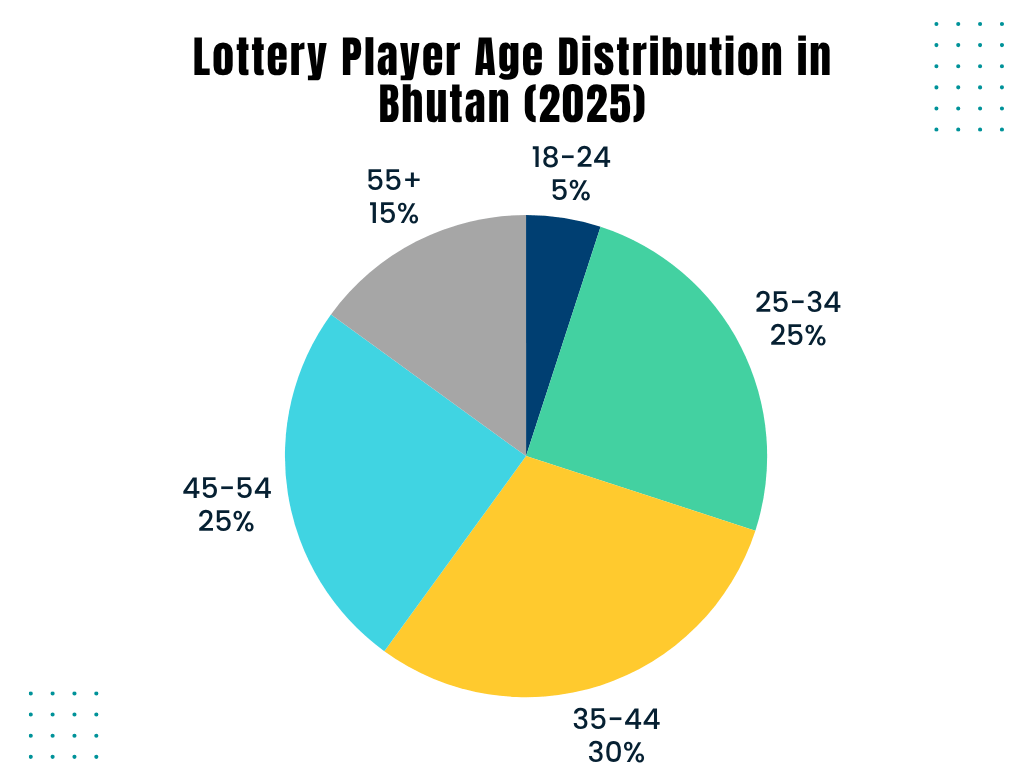
Table 1: Bhutan Gambling Market Overview (2025)
| Metric | Value / Status |
|---|---|
| Estimated Revenue (2025) | Low single-digit millions (USD) |
| Growth Rate (2025-2031) | Below 3% annually |
| Number of Active Players | Several thousand weekly |
| Popular Game Types | Government lotteries only |
| Casino/Sports Betting/Poker | Not permitted |
| Age Range | 25-55 years, middle-aged focus |
| Gender Ratio | Balanced male/female |
| Player Preferences | Small bets, social acceptance |
Regulatory Landscape
Overview of Existing Gambling Regulation
Bhutan has some of the strictest laws against gambling in the world, prohibiting all forms of gambling other than tightly defined state-run lotteries. The fundamental legal basis of this policy is a royal decree issued by the third king in 1977, which established a comprehensive and lasting ban on commercial casinos, internet-based gambling, poker, and betting, or any wagering activity. The Penal Code holds that “gambling exists when a person stakes or risks value on an occurrence, whether or not it is lawful, and is hoping for either a gain or an uncertain yield based on chance, competition, or an uncontrolled event.” This definition applies to both gambling done in a physical setting and on the internet. Culturally, these restrictions are consistent with Bhutan’s focus on Gross National Happiness and community happiness as opposed to individual gambling activity.
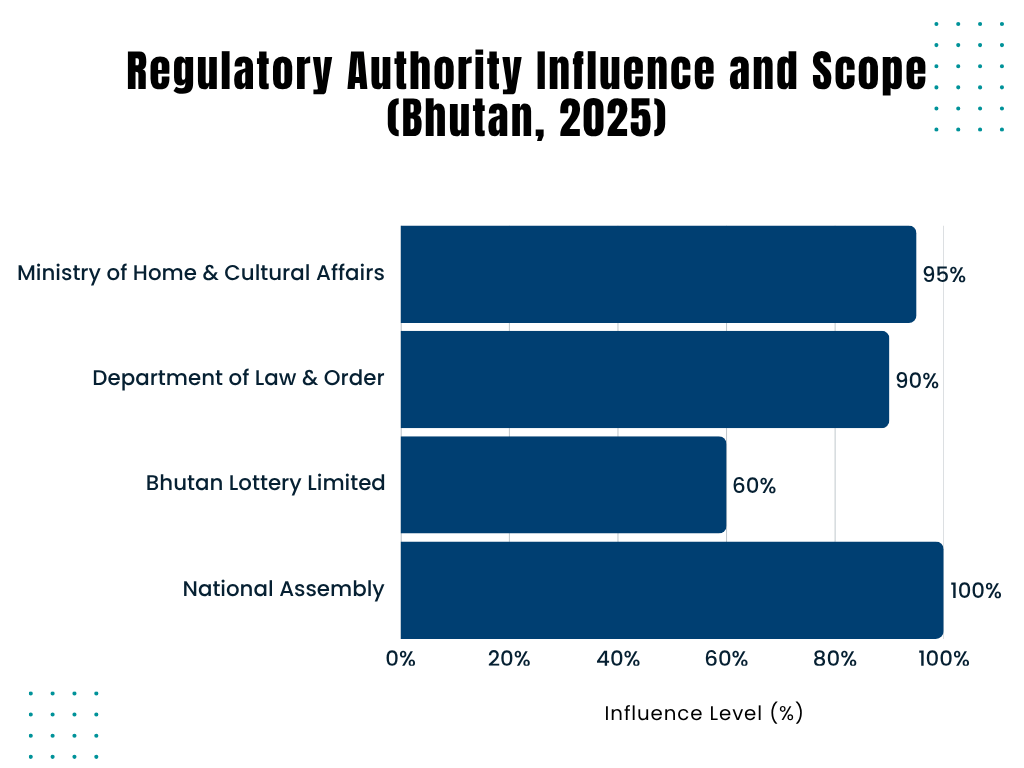
Table 2: Key Regulatory Authorities and Enforcement
| Authority | Role | Enforcement Power | Scope |
|---|---|---|---|
| Ministry of Home and Cultural Affairs | Policy oversight | High | National gambling policy |
| Department of Law and Order | Enforcement and compliance | High | Criminal violations |
| Bhutan Lottery Limited | Operations management | Limited | State lottery only |
| National Assembly | Legislative framework | Highest | Law creation/amendment |
Key Legal Principles:
- Total ban on casinos, poker, and betting—online and offline.
- Exception for government lotteries, operated with strict oversight and not classified as gambling by law.
Licensing Requirements and Regulatory Authorities
There is no licensing framework for commercial gambling operators within Bhutan. Either private operators internationally or domestically are prohibited from applying for any form of an iGaming license, whether it be for casinos, sports betting, or an online gambling platform. The only lawful gambling operator is the state lottery of Bhutan, which has been operated directly through the government by Bhutan Lottery Limited since 2016. As per the functioning of enforcement and policy oversight, the following parties are involved:
- Ministry of Home and Cultural Affairs
- Department of Law and Order
Taxation and Compliance Details
There is no tax structure specific to gambling for commercial operators, as there is a ban on private gambling. The lottery, which is run by the state government, is not subject to taxation in the manner of a private industrial enterprise; rather, the lottery revenues are collected and treated as state income gathered for public purposes. The Income Tax Bill of 2025, passed by the National Assembly, reaffirmed this monopoly status and maintained a general 22% tax on corporations, while revenues from the lottery became part of government revenues that do not divert to other purposes. Only government agencies running the state lotteries must adhere to some major compliance requirements and financial management.
Upcoming Changes in Legislation
Bhutan’s approach to gambling will not change in the near future. Recent legislative activity mainly focused on tax code revisions related to lottery income, but does not indicate any movement toward changing the legalization or liberalization of other gambling. The Penal Code and relevant acts are sometimes under review, but current proposals do not include easing restrictions on gambling, and any proposals that do make it through will likely either tighten enforcement or clarify the definition of gambling to conform to private sector activities rather than create avenues for private operators.
Legislative update of note:
- Income Tax Bill 2025: reaffirmed the lottery monopoly, removed other gambling activities from consideration as taxable business income, and increased the compliance burden regarding government lottery revenue.
- Crackdowns continue: As noted above, police and authorities continue to suppress illegal gambling through frequent crackdowns, with increased penalties and sharper definitions anticipated in future amendments.
The gambling regulatory environment in Bhutan continues to be stolid, with no prospect in the near-term of any re-introduction of private sector participation in gambling or iGaming.
Table 3: Regulatory Framework and Compliance Structure
| Gambling Type | Legal Status | Tax Rate | Licensing Allowed | Regulatory Authority |
|---|---|---|---|---|
| Private Casino | Prohibited | Not applicable | No | N/A |
| Sports Betting | Prohibited | Not applicable | No | N/A |
| Online Poker | Prohibited | Not applicable | No | N/A |
| State Lottery | Legal (Monopoly) | Government revenue | Yes (monopoly) | Ministry of Home and Cultural Affairs |
Competitive Landscape
Key Market Players
Bhutan’s gambling market is a functional monopoly dominated by the state through State Owned Enterprises (SOE), with Bhutan Lottery Limited (BLL) as the sole provider of all legal gambling products (generally lottery). BLL is a total SOE established by the Government of Bhutan in 2016, and is responsible for anything to do with lottery, including the development of games, ticket sales, drawing tickets, and paying out prizes. There are no private domestic or international gambling companies in Bhutan, as all commercial casinos, betting, and poker sections are illegal under the laws of Bhutan.
Main Market Players:
- Bhutan Lottery Limited – Government-owned limited company operating the only legal lottery in Bhutan.
- International Brands – No international sports betting company or bookmaking brand exists in Bhutan; the conditions of the legal framework would not permit entry or partnerships.
Market Share Distribution
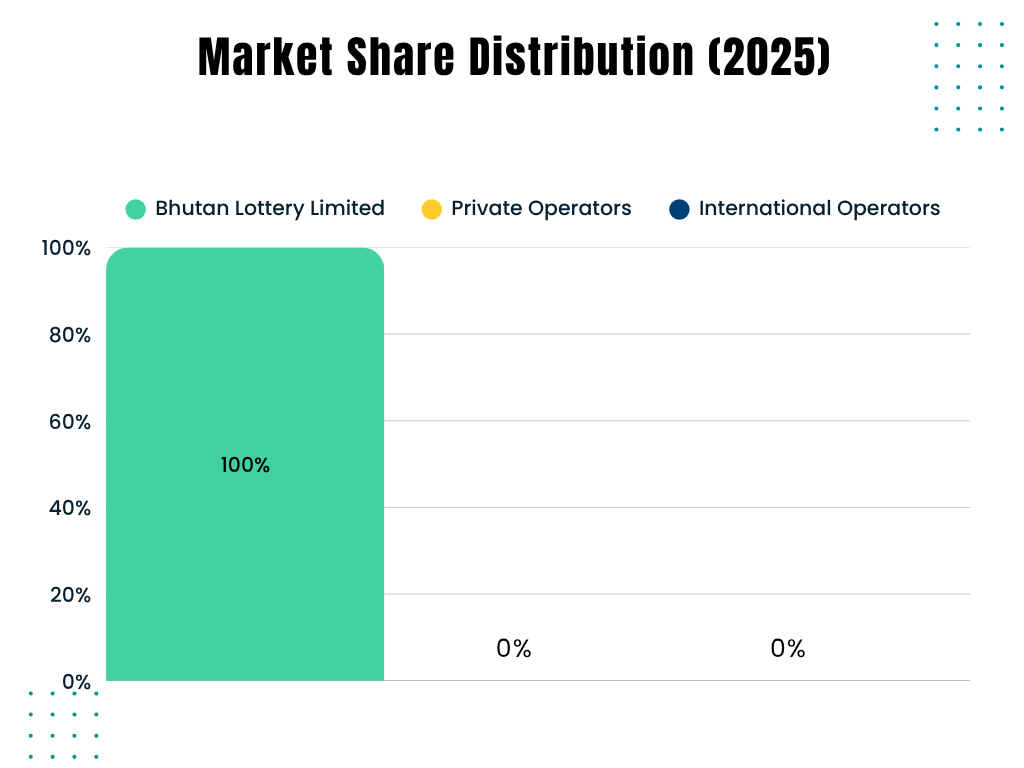
The market share is divided as follows:
- State Lottery (BLL): Holds 100% of both revenue and player share in the legal market segment.
- Private/International Operators: 0%. The presence of any private-sector operators in the state of play is illegal and is treated as a criminal act if discovered.
Table 4: Market Share Distribution (2025)
| Operator Type | Market Share | Legal Status | Revenue Control |
|---|---|---|---|
| Bhutan Lottery Limited | 100% | Government | State-owned |
| Private Operators | 0% | Prohibited | None |
| International Operators | 0% | Prohibited | None |
Partnerships and Strategic Alliances
Bhutan’s closely observed legal framework does not allow for actual partnerships, joint ventures, or collaborative enterprises with private companies onshore or offshore in the gambling space; the only “partnerships” allowed are with service and supply companies that provide lottery technology or distribution to the government. None of these arrangements is considered to be commercial partnerships, and sometimes a minor technical advancement is made solely by the government, and necessary lottery software or hardware is brought into the country, but that is planned out and remains under the jurisdiction of the state; simply put, no market for iGaming companies exists in this.
Noteworthy Points:
- The only route to market entry is through government sourcing, or “service/supply” contracts.
- There are reported joint ventures, equity partnerships, or any other type of alliance in relation to gambling.
- All attempted approaches to informally or across borders partnerships in digital lottery scams have been made illegal and actively prosecuted.
Consumer Trends
Player Behavior and Preferences
Lottery players in Bhutan are careful and socially responsible due to social mores concerning excessive gambling. The vast majority of legitimate play is in state-run lottery games and attracts an audience that is older than average, compared to casino-going or gambling, sports betting, etc. Players have a pattern of indicating that they prefer inexpensive, low-stakes tickets and generally view playing the lottery as a rarely-used recreational outlet, not something that is regularly habitual. Problem gambling rates are low, and spending patterns show a responsible and restricted nature as a result of cultural values and legal reasons.
Player Profile Highlights:
- Regular Lottery Play: Most play focuses on state lottery draws, tickets purchased weekly or every two weeks.
- Demographics: The majority of players are between the ages of 25-55, with even distribution across gender.
- Preference for Legitimacy: Most people will say that they trust state-run operations, while most people will be suspicious of foreign or private gambling operations.
Payment Methods and Technological Trends
The lottery environment in Bhutan generally consists of cash transactions made through authorized vendors. Although there has been a development in using digital payment systems for greater commerce, ticket sales are still primarily cash-driven due to regulatory and operational limitations. Some solutions, like utilizing mobile banking and interbank transfer for payment, have begun to see some use with time for other products, but not yet with a legal lottery transaction. E-wallets and app-based lottery purchases are not in great demand, nor are payment settlements using crypto in the lottery sector. This is indicative of regulation as well as limited availability.
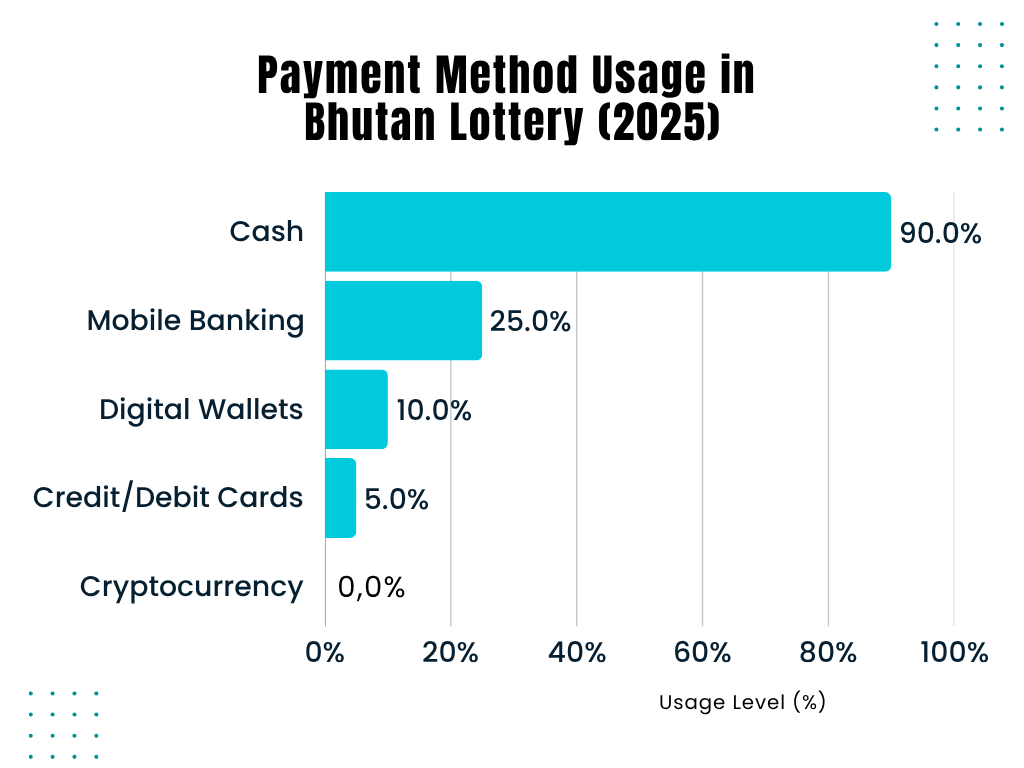
Payment Avenues or Insights:
- Cash Purchases: The main payment method for lottery tickets through licensed retail stores.
- Expanding Digital Payment Method: Emerging use for retail shopping, licensing, or regulated use of digital payments for lottery play is not currently in use.
- No Crypto Payments: Not allowed or accepted through Canadian government lottery products.
Social and Cultural Influences
Gambling in Bhutan is impacted by the nation’s Gross National Happiness (GNH) value system, prioritizing social/community harmony and outcome for the group or community rather than the individual or personal outcomes. Gambling is mostly viewed with skepticism and suspicion due to its potential for addiction and financial consequences. Hence, only the state-controlled lottery system is culturally and legally accepted as gambling; even state lotteries are marketed as social engagement or fundraising, not gambling. Families and communities encourage moderation, while the state lotteries have implemented responsible gambling policies, including a player-positive play program to limit the risk of harm.
Cultural Considerations:
- GNH Philosophy: Promotes risk aversion and limits broader gambling acceptance.
- Social Responsibility: Community norms restrict gambling to low-key activities and are strictly regulated.
- Responsible Gambling: State lottery operator offers social responsibility tools to assist players in managing their gambling expenses.
Bhutan’s gambling consumption pattern is unique: relatively risk-averse, heavily regulated, focused only on the state-sponsored lottery products, and with little willingness for technology, innovation, or risk; simply a reflection of the country’s law and culture.
Table 5: Consumer Payment Methods and Technology Adoption
| Payment Method | Usage Level | Lottery Integration | Regulatory Status |
|---|---|---|---|
| Cash Transactions | High (Primary) | Fully integrated | Approved |
| Mobile Banking | Growing | Not integrated | Available |
| Digital Wallets | Limited | Not integrated | Available |
| Cryptocurrency | Not permitted | Prohibited | Banned |
| Credit/Debit Cards | Minimal | Not integrated | Limited |
Opportunities & Challenges
New entrants have limited growth opportunities, whether in government partnership opportunities with lottery system modernization or operational consulting opportunities. For commercial iGaming operators and investors, the regulatory environment is such that they face absolute regulatory restrictions and considerable operational, compliance, and reputational exposure in those states. Other than innovative opportunities related to technological advancements or efficiency gains within state-run (government-operated) lotteries, new business opportunities mainly relate to the modernization of other lotteries, with potential consideration to the modernization of the lottery ticket sales processes within government-authorized systems.
In summary, opportunities are in supporting services, not actually interacting with the consumer. Specific challenges are the strict enforcement of statutory gambling laws, the absence of a licensing structure for the state and/or communities, a lack of tolerance for illegal gambling, and the legal and cultural perspectives toward gambling that view gambling as contrary to national happiness. Alternatively, such efforts to change the laws, in either case, would likely require the engagement of state and community processes to participate in consultation.
Conclusion & Recommendations
Bhutan’s gaming sector remains an extremely limited, highly restricted market wholly dependent on state lotteries. Operators and investors are restricted to market entry through collaborative partnerships with existing government lottery ventures around process and technology improvements. Strict non-compliance penalties and no route to enter casino, poker, or sports betting harden the regulatory landscape, where investment is limited to those who comply with social objectives and public welfare. Prospects indicate that regulatory conservatism will continue, with very limited appetite for expanded offerings beyond the existing lottery apparatus.
Strategic Recommendations for Market Entry
- Engage government agencies for service, technology, or operational enhancements to existing state lotteries.
- Keep abreast of regulatory changes and be prepared and aware of any changes in social or legislative considerations.
- Stay far away from investments in unauthorized markets, and focus only on investments in authorized state lotteries.
- Reputation management is a priority given the strict social and regulatory environment.
Future Outlook for the iGaming Sector in Bhutan
Gambling policies in Bhutan are unlikely to become liberalized in the near term; any and all actors in the industry will need to align their strategic interests with the state and find ways to strictly comply with existing and emerging legal requirements to operate in this market.
Data and Sources:
- 6Wresearch: Bhutan Gambling Market (2025-2031) – Market size, share, growth, and operator information;
- JohnnyBet: Bhutan Lottery Promo Code 2025 – Product types and consumer trends;
- LegalPilot: Is Gambling Legal in Bhutan? Laws & Regulations Explained 2025 – Licensing, regulatory authorities, and compliance insights;
- National Assembly of Bhutan: The Income Tax Bill of Bhutan 2025 – Tax and revenue structure for government lottery;
- Transfi: Popular Local Payment Methods and Solutions in Bhutan – Payment technology overview and consumer adoption;
- Gross National Happiness and Development (Bhutan Studies): Social and cultural influences shaping consumer behavior;
- Bhutan Lottery Ltd.: Official lottery draw results and operational announcements;
- Angus Reid Group: Lottery & Gaming Market Insights – Player profile, trends, and behavior;
- AryaNews: Cross-border lottery scams targeting Bhutanese – Regulatory enforcement and illegal operator landscape;
This content is sourced from www.igamingtoday.com and is shared for informational purposes only.