Grizzlies might be the biggest winners, and losers, of NBA Draft lottery reform
The NBA approved its long-awaited, overly complicated draft lottery reform on Thursday.
The Memphis Grizzlies got unequivocally screwed.
The NBA Board of Governors today approved a new NBA Draft Lottery system designed to eliminate incentives for teams to prioritize their position in the Draft over winning games.
Full release: https://t.co/I42k5HeUV0
Additional information regarding the new system, including the… pic.twitter.com/o1QItNPIit
— NBA Communications (@NBAPR) May 28, 2026
Buried in the fine print is a provision that prevents teams from landing a top-five pick in three consecutive drafts. That applies to each team’s own pick, not any pick that it might acquire from another team via trade.
That brings us back to the Grizzlies, who acquired the most favorable of the Utah Jazz, Cleveland Cavaliers and Minnesota Timberwolves’ 2027 first-round pick as part of their return package for Jaren Jackson Jr. at this year’s trade deadline.
The Jazz landed the No. 5 pick in 2025 and the No. 2 pick in this year’s draft, which means they are ineligible to land a top-five pick in 2027. That restriction now applies to the pick that they owe the Grizzlies.
If the Timberwolves or Cavaliers somehow wind up with a top-five pick, that will instead convey to the Grizzlies and they’ll be no worse for the wear. But if the Jazz have the highest pick of those three teams, the best it can be is the No. 6 pick.
According to ESPN’s Shams Charania, the Grizzlies were the only team to vote against lottery reform for that exact reason.
Sources said the Grizzlies voted against the new lottery reform solely because of the new rule disallowing a team from picking top 5 in 3 consecutive years. As @BobbyMarks42 says, the Grizzlies have the more favorable 2027 first-rounder of Cleveland, Minnesota and Utah, and… https://t.co/BMbYAbr776
— Shams Charania (@ShamsCharania) May 28, 2026
Evan Wasch, the NBA’s head of basketball strategy and growth, spoke with reporters Thursday after the lottery reform was approved and specifically addressed this Jazz/Grizzlies conundrum.
“Given that the Grizzlies were unaware of this restriction when they acquired the pick,” John Hollinger of The Athletic wrote, “wouldn’t it have made sense to grandfather this pick and others like it (such as the unprotected 2029 Phoenix Suns pick owned by the Houston Rockets) from such a restriction?
“The league did not want to do this, however, because it would have created the potential for the Memphis pick to benefit from restrictions on other picks without it being restricted itself. Consider, for instance, an example where the Washington Wizards win the 2027 lottery but, by rule, cannot pick first and thus get pushed down. What if Utah were the next name drawn?”
Wasch said grandfathering previously traded picks would “essentially differentiate those picks as being more valuable than all other picks” because “they would benefit from the upside of the restrictions without any of the downside.”
While the Grizzlies have every right to be salty about how these new rules impact the ceiling of the 2027 Jazz pick, they should also be otherwise ecstatic about the reform. They might be one of the primary beneficiaries from these new rules as well.
The Grizzlies blew it up at the right time
Last offseason, the Grizzlies traded Desmond Bane to the Orlando Magic for four unprotected first-round picks and one first-round pick swap. They got fully unprotected Orlando picks in 2028 and 2030, along with a top-two-protected pick swap in 2029.
At the trade deadline, the Grizzlies then continued their roster detonation by sending JJJ to the Jazz for the aforementioned 2027 Jazz/Cavaliers/Timberwolves pick along with the Los Angeles Lakers’ unprotected 2027 first-round pick and the Phoenix Suns’ unprotected 2031 first-round pick.
This new lottery system is only guaranteed to be in effect for three years, so it might not impact the value of the 2030 Magic or 2031 Suns picks. However, the emerging consensus is that picks over the next three years have become far more valuable given the wider range of variance for each pick.
Jake Fischer of The Stein Line reported that “according to some estimates in circulation,” first-round picks “might be seen as twice as valuable as they previously were” thanks to this new system. One general manager also told him that he refused to trade “any picks beyond 2029” due to the uncertainty about the draft rules in 2030 and beyond.
Mike Vorkunov of The Athletic reported in mid-May that team executives believe the new system “will cause more variance in the draft because the lottery odds will have shifted so dramatically.” That “will make draft picks more valuable going forward because that variance will make it more likely to land a high pick,” he added.
The Grizzlies not only have control of all of their own picks moving forward, but they also have two additional first-rounders in 2027 along with the top-two-protected swap rights with Phoenix in 2029. (Unfortunately, they already traded away the Magic’s 2028 first-round pick in their trade-up for Cedric Coward during last year’s draft.) That gives them as many as six bites at the high-variance lottery apple over the next three years.
Unless executives around the league are bluffing about how they’re valuing first-round picks moving forward, there’s almost zero chance the Grizzlies could have gotten a similar return for Bane or Jackson had they waited to trade them until this offseason. Unlike the Milwaukee Bucks, who dragged their feet with Giannis Antetokounmpo all season and now might pay the price, the Grizzlies picked the right time to blow it up.
Granted, the new lottery system will also impact their own odds of landing a high pick.
Can the Grizz avoid the ‘relegation zone’?

Under the new system, the teams with the three worst records have worse odds of landing the No. 1 overall pick than the other non-play-in-tournament teams. Those teams can’t fall lower than 12th in the lottery, though, while the other 13 teams can drop as low as No. 16.
Under the previous system, the teams with the three worst records all had a 14 percent chance of landing the No. 1 pick and could fall no more than four spots from where they finished in the standings. Teams in the bottom six were guaranteed to land a top-10 pick.
That’s no longer the case.
Teams with the three worst records now only have a 28 percent chance at snagging a top-five pick and a 61 percent chance at landing in the top 10. The non-play-in-teams have a 39 percent chance of winning a top-five pick and a 73 percent chance at a top-10 pick.
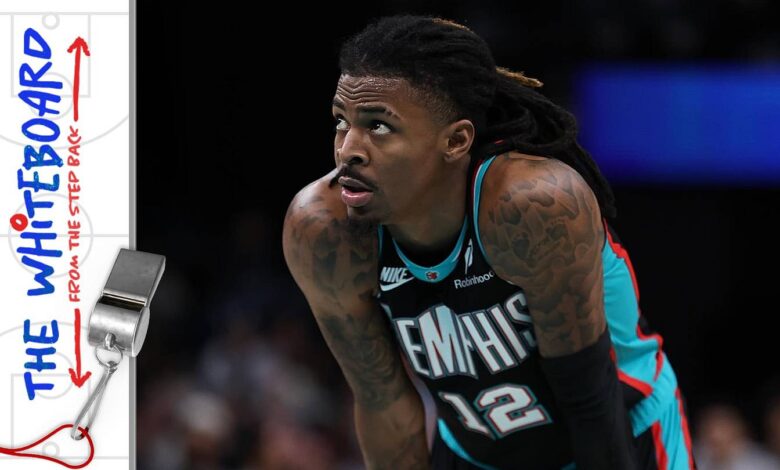
If the Grizzlies do trade Ja Morant this offseason, they could be in danger of finishing with one of the league’s worst records next year, as they’ll be in full-rebuild mode. Granted, between whomever they select with the No. 3 pick in this year’s draft, Coward, Zach Edey and Jaylen Wells, they have a solid foundation of young players in place. They also have a fair bit of financial flexibility, which should allow them to be active on the trade market.
The Grizzlies aren’t likely to make a win-now push this offseason. But whenever they do move into that mode, having a surplus of picks available should only help them accelerate that process, particularly if they get lucky in the 2027 lottery.
It just won’t be courtesy of the Jazz.
More NBA news and analysis:
 Add us as a preferred source on Google
This content is sourced from fansided.com and is shared for informational purposes only.