The Hidden Tax Cost Of A $1.5 Billion Powerball Jackpot
Lotto tickets are covered with one hyndred dollar bills.
getty
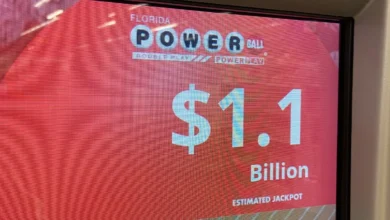
The Powerball jackpot prize has now reached an estimated $1.5 billion, the seventh-largest lottery prize of all time. While one lucky Powerball winner could be coming home with a tremendous amount of money, some may not realize that these winnings are subject to income tax, and the tax they owe on this money can vary significantly based on where the ticket was purchased and where the winner resides. The after-tax consequences of winning the Powerball and the role of state income taxation are key factors to consider.
Powerball Overview
The Powerball is a game where an individual selects five numbers (1 through 69) and a Powerball (1 through 26). Prizes are awarded starting at $4 (matching just the Powerball) up to $1 million (matching all five numbers). However, the grand prize involves the individual matching all five numbers and the Powerball. This grand prize is progressive, meaning it starts at a base level of approximately $20 million and increases each time somebody does not win the grand prize. If more than one person matches all six numbers, that grand prize will be divided evenly among the winners.
According to NBC Bay Area, The Dec. 17, 2025, drawing marked the 44th consecutive drawing without a jackpot winner since Sept. 6, allowing the prize to grow from $20 million to an estimated $1.5 billion.
When an individual wins the grand prize, they are given two options on how to receive the money, according to the Powerball website. For Saturday’s drawing, a grand prize winner would get to choose between receiving the advertised $1.5 billion as a 30-year annuity (before taxes and adjusted for the time value of money). This involves the winner receiving an estimated $50 million annually for 30 years. Alternatively, the winner can receive a one-time cash payment of $686.5 million, according to Forbes.
Taxes On Powerball Winnings
While the act of going to a gas station and purchasing a lottery ticket may not feel like work, the reality is that winning the lottery is considered income and subject to taxation under Section 61 of the Internal Revenue Code. Even more striking is the notion that this income increases gross income, which means that a grand prize Powerball winner will now have a significant portion of the winnings taxed at the top marginal income tax rate (37% at the federal level).
Let’s take the estimated $686.5 million lump sum prize as an example. According to the IRS and its instructions under Form W-2G, 24% of the winnings will automatically be withheld, with any additional taxes owed paid at year’s end. However, in total, the taxpayer will need to pay taxes on the remaining amount, with the vast majority (all income over $626,350 if single or $751,600 if married) being taxed at a 37% federal income tax rate. This means that the taxpayer will pay in excess of $253 million in federal income taxes absent any other individual or tax planning considerations.
States Also Tax Powerball Earnings
States also treat this as income, which means that taxpayers will owe up to 10.9% of their winnings in a state like New York, according to Forbes. While California otherwise has the highest income tax rate in the U.S., it and Delaware do not tax lottery winnings.
These two states join the other nine that impose no state income tax on all income (Alaska, Florida, Nevada, New Hampshire, South Dakota, Tennessee, Texas, Washington and Wyoming) as the best states for winning the lottery based on taxes, according to Jackson Hewitt. In fact, with a potential lump sum prize of $686.5 million, the difference between winning the lottery in New York and California can be worth more than $70 million after taxes.
However, Powerball players should be cautious if they are residents of Massachusetts (top income tax rate of 9%) and intend to drive across the border to New Hampshire (no state income tax imposed) to buy their lottery tickets. According to GovFacts, if you win the lottery in a state where you are not a resident, you may be subject to tax in the state where you win and your resident state. This means that a Massachusetts resident will still need to pay 9% income tax on the lottery earnings from New Hampshire. If both states impose an income tax, the taxes paid in the winning state can be used to reduce the taxes paid in the resident state, preventing double taxation.
While winning a $1.5 billion Powerball jackpot is beyond the wildest dreams of most who play the game, it is important to point out that it is not as simple as the winner receiving $1.5 billion. Even after the lump-sum payment reduces the prize to $686.5 million, the hidden tax cost is more than $253 million at the federal level and even higher if the Powerball player wins or is a resident of a state that imposes a tax on lottery winnings.
This content is sourced from www.forbes.com and is shared for informational purposes only.