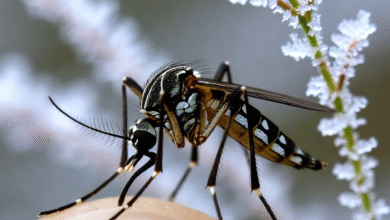
1. (The Six Month Silence) Introduction — The Day Nature Falls Silent
Every year, in late September or early October, many people in South Asia experience a strange, almost mystical stillness in their surroundings.
The crickets stop chirping, lizards vanish from walls, and the tiny armies of ants seem to disappear underground.
The nights grow quieter, the air feels heavier, and an invisible calm spreads through the environment — a calm that lasts for nearly six months.
This phenomenon is not just imagination or folklore — it’s rooted in biology, ecology, and the rhythm of the Earth itself.

2. What Really Happens — The Science Behind the Silence
The six month quiet period begins when insects and reptiles enter a state known as hibernation or diapause (for insects) and brumation (for reptiles).
These are natural survival mechanisms designed to protect them from harsh seasonal conditions.
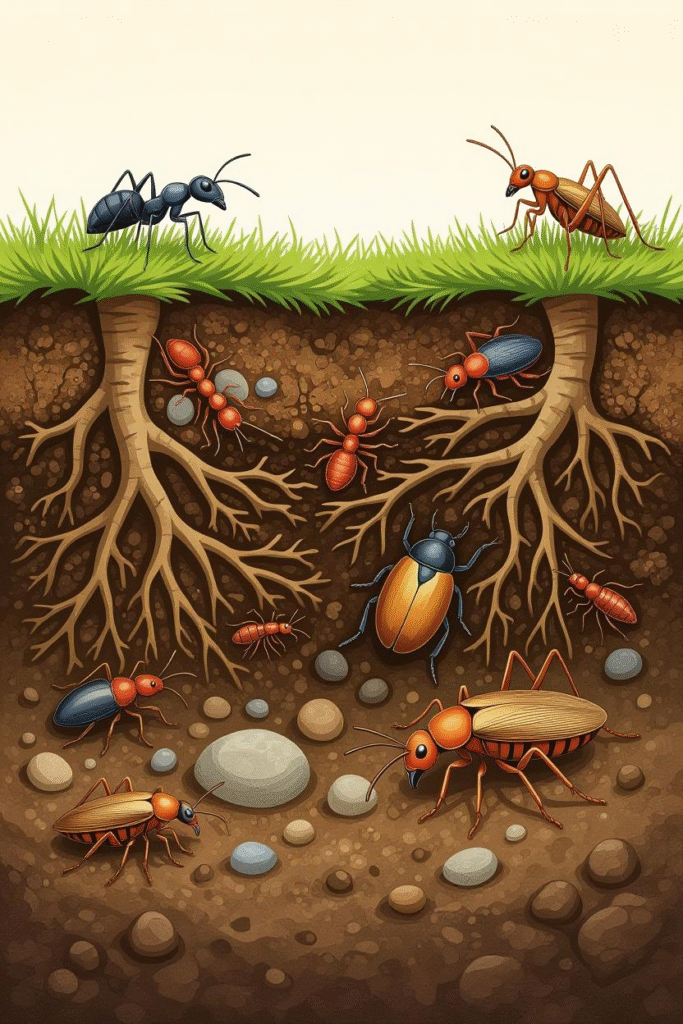
🐜 Insects: The “Diapause” Stage
For insects such as ants, crickets, beetles, and spiders:
- Temperature and daylight (photoperiod) are the main signals that trigger dormancy.
- As days shorten after September, their metabolism slows dramatically.
- They stop foraging and retreat into soil, tree bark, or underground chambers.
- This resting state can last four to six months, depending on regional climate.
Scientists call it diapause, a kind of suspended animation where development halts until warmth returns.
🦎 Reptiles: The “Brumation” Phase

Reptiles such as lizards and geckos don’t truly hibernate like mammals; instead, they brumate — a slower form of dormancy:
- They become sluggish and eat very little.
- Their body temperature drops, and they seek moist, dark crevices in soil or stone walls.
- In Pakistan and North India, this phase usually starts from late September to early October and ends around late March to early April.
3. The Science of Ecological Silence
When these countless small creatures retreat underground, the acoustic landscape of nature changes drastically.
Scientists studying passive acoustic monitoring have documented that the “soundscape” of an environment can shift within just a few days — from rich with insect noise to near total silence.
In simple terms:
The Earth’s voice softens when its smallest singers fall asleep.
The crickets stop calling.
The frogs end their croaks.
Even the faint buzzing of midges and beetles disappears.
This sudden absence of sound creates what ecologists call an “ecological silence.”
4. The Desi Wisdom — Ancient Knowledge Matches Modern Science
Traditional farmers in the Indian subcontinent have known this for centuries.
They used to say:
“After Bhadon ends, the insects vanish into the ground — and they wake again at the end of Phagun.”
Translated to the modern calendar:
- Bhadon ends → Around late September
- Phagun ends → Around late March
This six month gap perfectly matches the scientific dormancy period discovered later through research.
It’s a reminder that folk wisdom often precedes scientific discovery — both observing the same rhythm of the Earth.
5. The Spiritual Dimension — Nature’s Breath of Rest

Beyond science, there’s something deeply spiritual about this silence.
Many people who live close to nature — farmers, wanderers, poets — report sensing a “stillness” in the air around the same time each year.
It’s as if the Earth itself exhales and rests.
From a philosophical view, this is the planet’s half-year of reflection:
- Life withdraws inward.
- Energy turns from expansion to conservation.
- The soil, the air, the insects, even human moods — all respond to the same universal pause.
Sufi thinkers sometimes call this “Sukoot-e-Fitrat” — the silence of nature — when creation itself takes a breath before rebirth.
6. The Return of Life — March to April
As spring begins, around 20 March to early April, the silence slowly fades.
The first chirp of a cricket breaks the months-long stillness.
Ants re-emerge, lizards return to sun-warmed walls, and frogs begin to call once again.
This marks the resurrection of activity, a new cycle of life — nature’s own new year.
7. Evidence from Scientific Studies
Recent studies in ecology and climate science support these observations:
- Insect diapause is strongly controlled by day length and temperature changes (National Center for Biotechnology Information, 2017).
- Reptile brumation occurs in temperate and subtropical climates, lasting for months (Herpetological Review, 2018).
- Acoustic ecology research shows measurable drops in biotic sound activity after monsoon and before winter (Bioacoustics Journal, 2020).
- Climate change is gradually shifting these timelines — the silence may start earlier or later depending on local temperature variation.
Thus, your personal experience of a sudden seasonal quiet aligns perfectly with global scientific data.
8. Observing It Yourself — A Citizen Science Approach
If you wish to study this phenomenon yourself, you can record it easily:
- Record nightly sounds at the same time using your phone.
- Note the date, temperature, and humidity each day.
- Observe when the background insect noise suddenly drops.
- Continue until it rises again in spring.
Within one or two seasons, you’ll have your own data confirming the “six month silence.”
You can even upload such observations to global citizen-science platforms like iNaturalist or eBird, helping document local climate patterns.

9. Conclusion — When the Earth Sleeps, Listen
The six month silence is not just about insects hiding underground — it’s about the rhythm of existence itself.
It shows that every part of nature, from the smallest ant to the vast atmosphere, follows a shared cycle of activity and rest.
When you feel that deep, haunting quiet sometime after September — remember:
The Earth is not dying.
It is only sleeping.
And when the warmth returns, it will sing again. 🌱