The evolution of internet delivery tells a remarkable story—from the noisy dial-up modems of the 1990s to the silent power of fiber and 5G in 2025. What started as an experiment in universities is now a global utility powering economies, communication, and entertainment. By looking at historical milestones, broadband technologies, and future projections, we can understand how internet delivery has become one of the most transformative forces in modern history.
1. Historical Timeline: The Evolution of Internet Delivery
1960s–1980s: The Early Foundations
- ARPANET (1969) launched the concept of packet-switching networks.
- Access was limited to researchers via LANs or 1,200 bit/s modems.
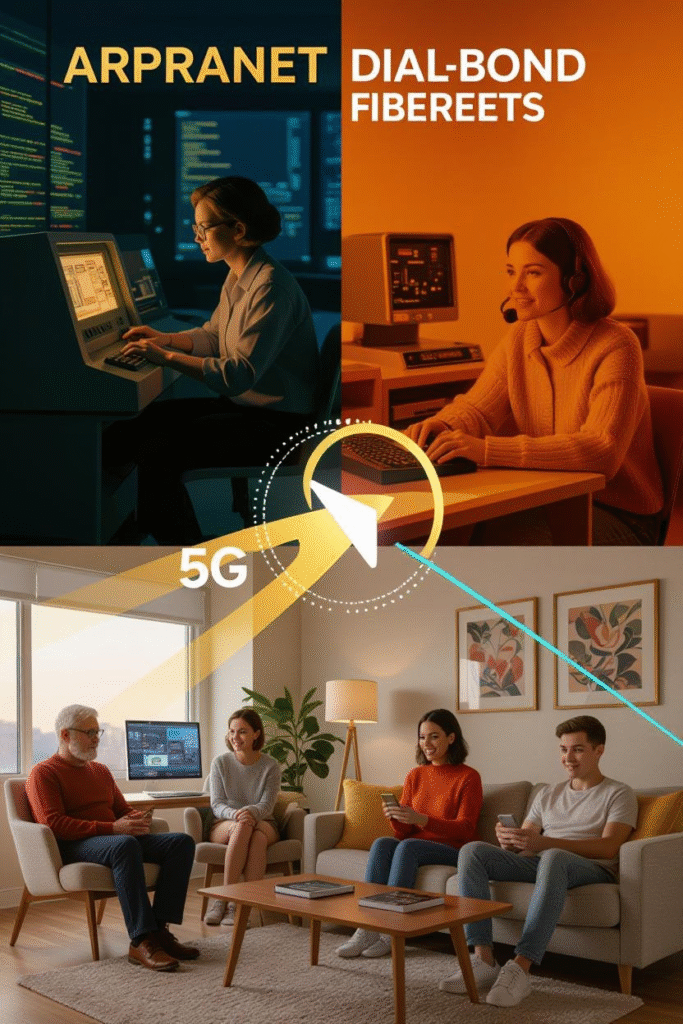
fiber, and 5G, showing people using technology at each stage.
1990s: Dial-Up Internet
- ISPs like AOL, Prodigy, and CompuServe introduced home access.
- Typical speeds: 56–128 kbps.
- Drawbacks: Busy phone lines, long loading times, and the infamous modem sound.
- Peak AOL subscribers: 25 million in 2000.
2000s: Broadband Revolution
- DSL and cable replaced dial-up with always-on internet.
- Speeds reached 24 Mbps, enabling video streaming and early social media.
- Broadband reshaped lifestyles by making internet central to daily life.
2010s: Fiber and Mobile Growth
- 3G and 4G LTE mobile broadband transformed connectivity on-the-go.
- Fiber networks provided symmetrical speeds for uploads and downloads.
- Cloud computing, HD video, and online gaming thrived.
2020s: The 5G Leap
- 5G introduced gigabit speeds and ultra-low latency (<1 ms).
- Fixed Wireless Access (FWA) challenged cable and DSL.
- In 2025, AOL officially ended dial-up, closing a nostalgic chapter.
2. Broadband Technologies Shaping the Evolution of Internet Delivery in 2025
| Technology | Delivery Method | Speeds (2025) | Pros | Cons | Examples |
|---|---|---|---|---|---|
| DSL | Copper lines | 1–100 Mbps | Cheap, available | Slow, outdated | AT&T, CenturyLink |
| Cable | Coaxial cable | 100–1,000 Mbps | Affordable, reliable | Congestion, weak uploads | Xfinity, Spectrum |
| Fiber Optic | Light signals | 100 Mbps–10 Gbps | Ultra-fast, low latency | Limited rollout | Google Fiber, Verizon Fios |
| 5G FWA | Wireless towers | 50–1,000 Mbps | Easy setup, rural reach | Weather-dependent | T-Mobile, Verizon |
| Satellite | LEO satellites | 50–500 Mbps | Global coverage | Latency, data caps | Starlink, HughesNet |
- Trend: 5G FWA captured all U.S. net broadband adds in 2023.
- Pricing: 5G Home averages $72/month, cheaper than wired broadband ($81).
- Global Reach: 5G now covers 503 U.S. cities and 356 Chinese cities.
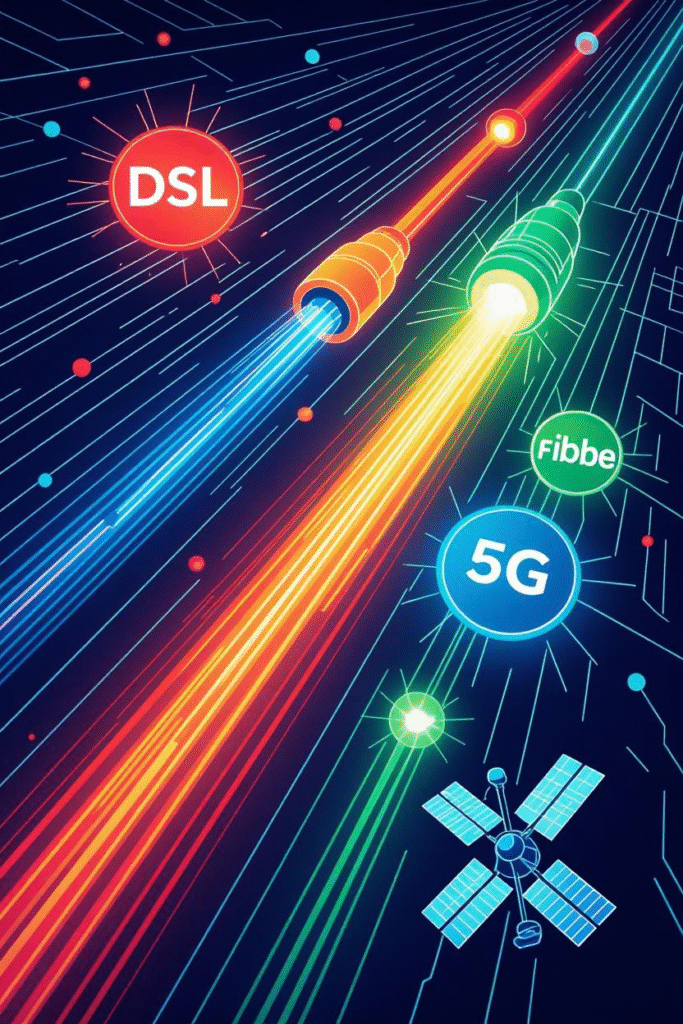
3. ISP Market & Challenges in the Evolution of Internet Delivery
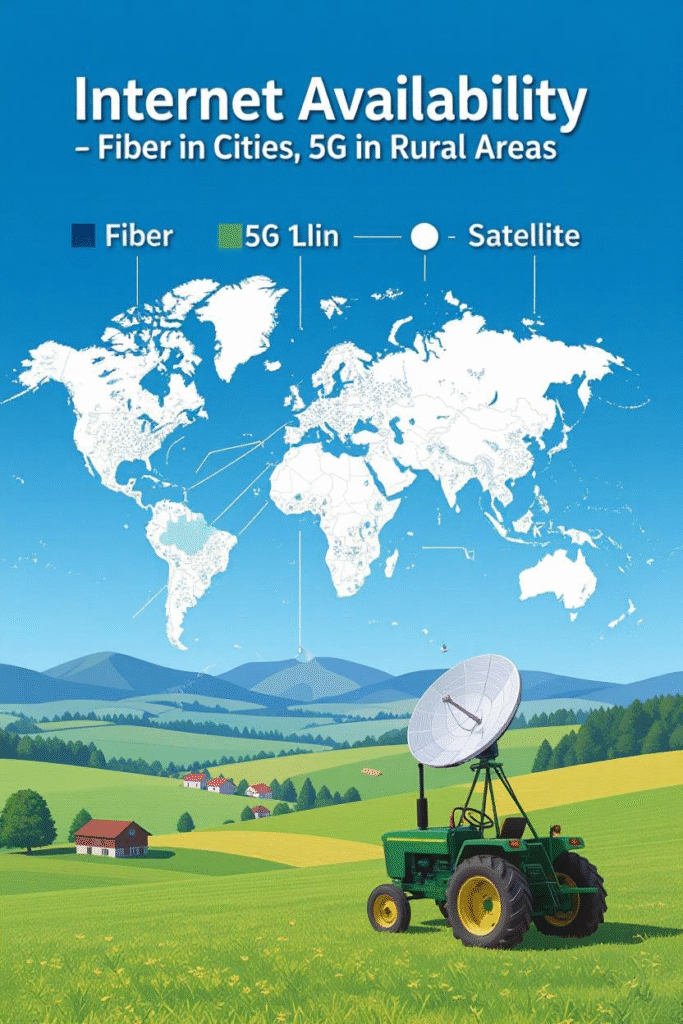
in cities, 5G in rural areas, and satellite in
remote regions.
- Top ISPs by Satisfaction (2025):
- Google Fiber – fastest fiber service
- Verizon Fios – reliability leader
- T-Mobile 5G Home – best value
- Market Size: ISP industry worth $714B in 2025 (up from $672B in 2024).
- Challenges:
- Rural digital divide: 6.8M Americans still without broadband.
- Tariffs and equipment shortages push ISPs to domestic sourcing.
- Growing demand for cybersecurity and smart home bundles.
4. Nostalgia & Cultural Memory of Internet Delivery
- AOL’s dial-up shutdown in Sept. 2025 marked “the end of an era.”
- Social media buzz revived memories of waiting minutes for a single webpage.
- Viral comparisons:
- 1999: 2 hours to download a 4MB song.
- 2025: 0.03 seconds on 5G.
5. Future Outlook: What Comes After 5G in the Evolution of Internet Delivery?
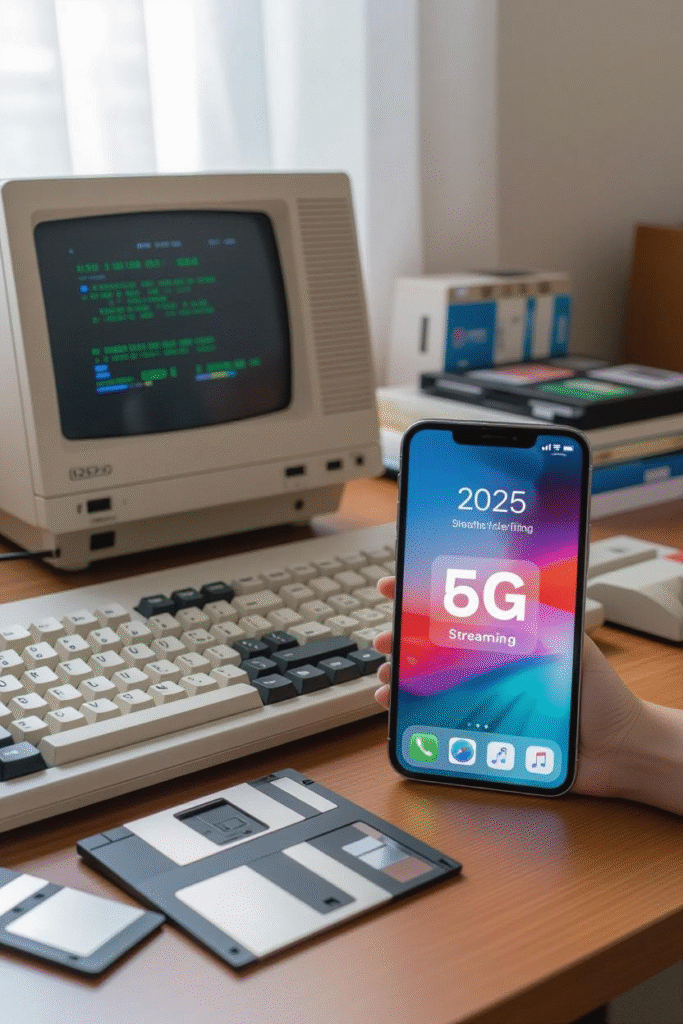
- 6G Networks: Expected around 2030, with terabit speeds and holographic calls.
- Smart Cities: Powered by IoT and AI-driven networks.
- Space-Based Internet: Starlink aims for 8,000+ satellites by 2030.
The next phase of the evolution of internet delivery will not just be about speed but equity—bringing reliable connectivity to underserved populations.

Conclusion
The evolution of internet delivery mirrors humanity’s hunger for speed and connection. From ARPANET to 5G, each step changed how we live, work, and communicate. As 6G and space-based networks loom, the challenge is ensuring this progress reaches everyone—not just the connected few.